
Tesla's global deliveries in the first quarter reached 358,000 units, below the Bloomberg-compiled analysts' average forecast of 372,000 units, marking one of the weakest quarterly performances in recent years. Total vehicle production amounted to 408,000 units, a year-on-year increase of 13%, surpassing the expected 388,000 units. The gap between production and deliveries indicates inventory accumulation, potentially reflecting pressure on end-user demand.
$Tesla (TSLA.US)$ Failing to meet Wall Street expectations for the second consecutive quarter has put pressure on this electric vehicle manufacturer, which is seeking a business transformation.
The company announced on Thursday that its global deliveries in the first quarter of this year totaled 358,023 units, below the Bloomberg-compiled analysts' average estimate of 372,160 units, marking one of the weakest quarters in recent years.
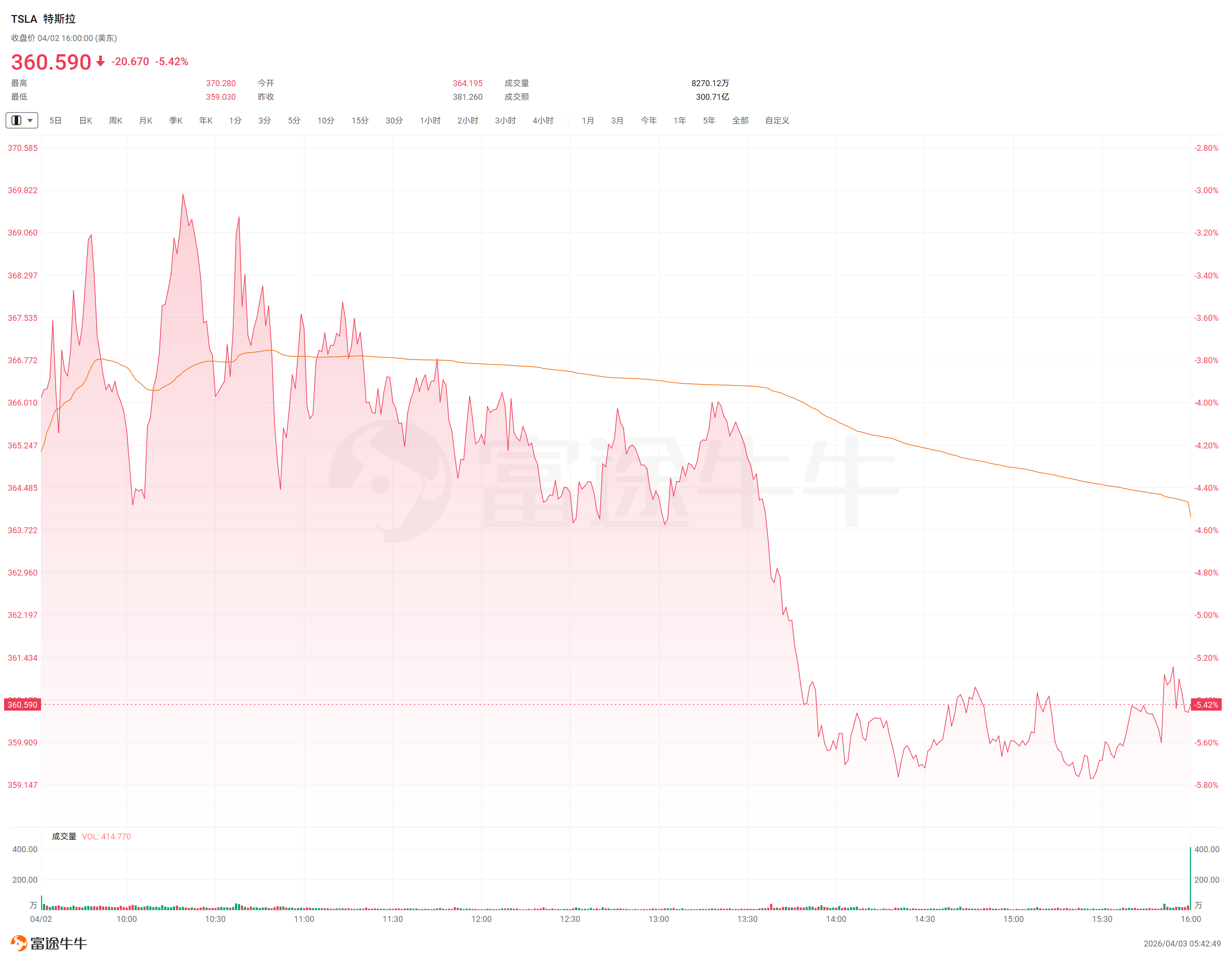
 Following the release of the delivery figures, Tesla's stock price fell more than 5% in U.S. trading, further exacerbating its cumulative decline since the beginning of the year.
Although overall deliveries increased by 6.3% year-over-year, this growth rate was based on a relatively low base period—last year, Tesla temporarily halted production at its global factories for its main model, the Model Y, and faced market resistance toward CEO Elon Musk. The current softening demand for electric vehicles in the U.S. has further complicated the recovery of Tesla’s core business.
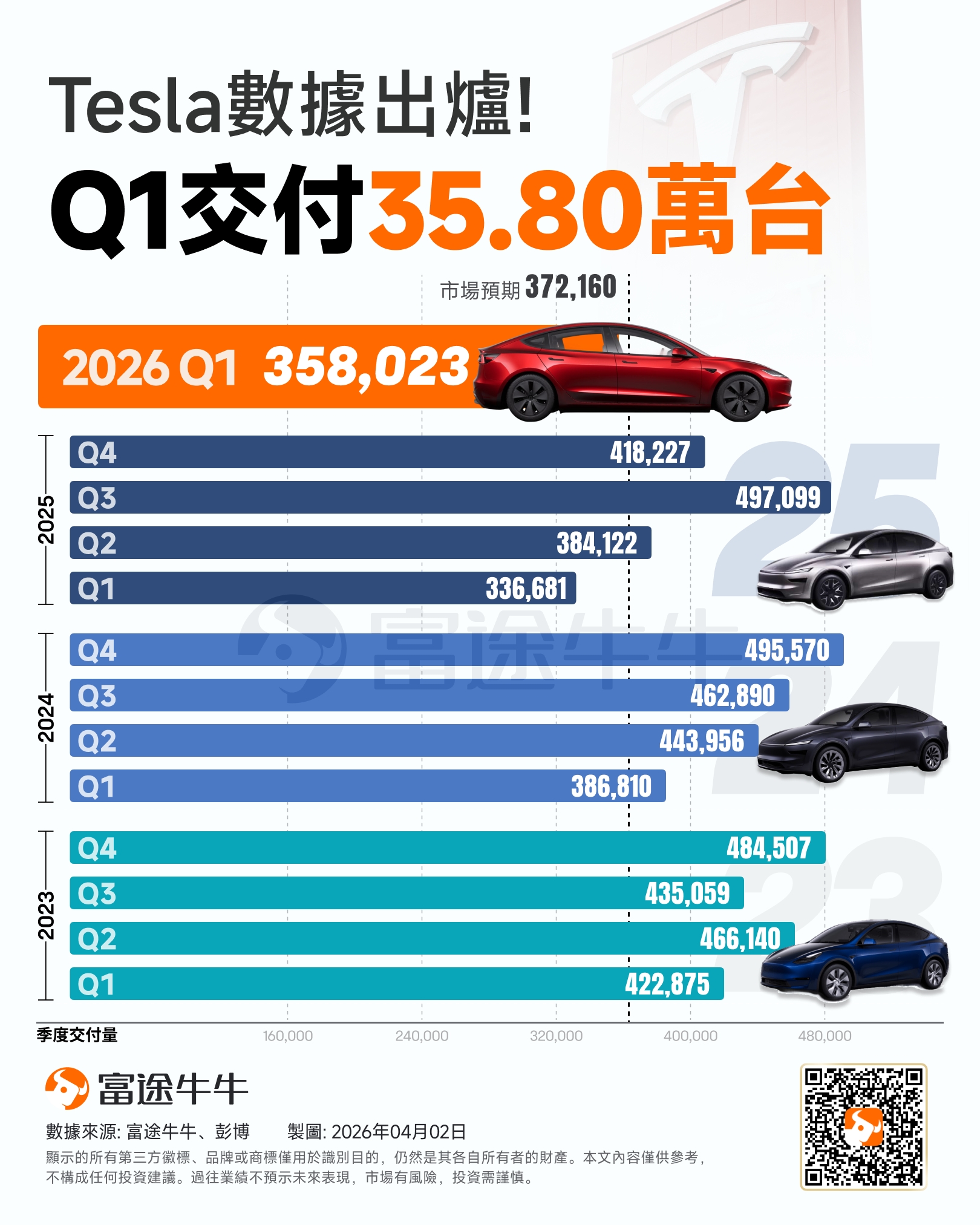
Deliveries fell short of expectations, with key models showing significant drag.
In the first quarter, combined deliveries of Tesla's Model 3 and Model Y reached 341,893 units, up approximately 5.6% year-over-year, but still below the market’s average expectation of 353,928 units.
Meanwhile, total vehicle production amounted to 408,386 units, a year-over-year increase of 13%, surpassing the expected 388,169 units; production of the Model 3/Y reached 394,611 units, growing by about 14% year-over-year, also exceeding expectations of 377,147 units. The gap between production and deliveries suggests an accumulation of inventory, potentially reflecting pressures on end-user demand.
Stock price remains under continuous pressure, with cumulative declines recorded year-to-date.
Following the release of the data, Tesla’s stock fell 3.6% in pre-market trading in New York, compounded by broader market weakness, extending the downward trend.
As of Thursday's close, the stock had fallen 20% from its peak earlier this year.
Analysts have continuously lowered their delivery forecasts for Tesla in recent weeks, yet the final actual results still failed to meet the revised expectations, indicating that confidence in its core sales operations remains fragile.
Investors bet on future businesses, but the core automotive operations remain critical.
Despite ongoing pressure in sales data, investors have largely focused on Tesla's strategic layout in artificial intelligence, autonomous driving, and robotics. Elon Musk has also recently emphasized these cutting-edge business directions to the market.
Nevertheless, the traditional automotive business remains the primary cash source for this Austin-based company. Amidst fluctuating demand for electric vehicles in the U.S. and an increasingly complex competitive landscape, whether Tesla can regain sales momentum remains a core concern that investors cannot ignore.
 Looking to pick stocks or diagnose stock performance? Want to know the opportunities and risks in your portfolio? For all investment-related questions,just ask Futubull AI!

Editor/Rocky