①The latest data shows that the one-year lease price of NVIDIA's H100 has rebounded to $2.35 per hour since the low point in October last year, with an increase of nearly 40%; ②The demand for multi-agent systems and native media generation has driven token consumption into parabolic growth, resulting in older GPUs also being in short supply; ③Key areas to observe going forward include the scaling pace of GB300, the degree of chip shortages, and the ARR expansion speed of AI vendors.
Cailian Press, April 3 (Editor Shizhengchi) -- Since the beginning of the new year, continuous blockbuster applications released by AI giants like Anthropic and ByteDance, combined with the 'Lobster' craze driving a surge in calls to open-source large models, have led NVIDIA’s H100 chips to experience a 'V-shaped' reversal in value in the leasing market.
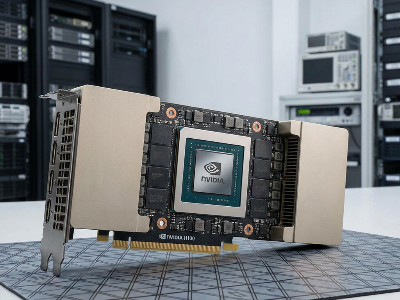
It is worth noting that this chip was announced by Jensen Huang at the GTC in March 2022 and began shipping in the same autumn.
 According to the 'H100 One-Year Lease Contract Price Index' released Thursday by semiconductor research firm SemiAnalysis, the leasing contract price for this 'older chip' has soared to $2.35 per GPU per hour in March this year, up nearly 40%, from $1.70 per hour in October 2025.
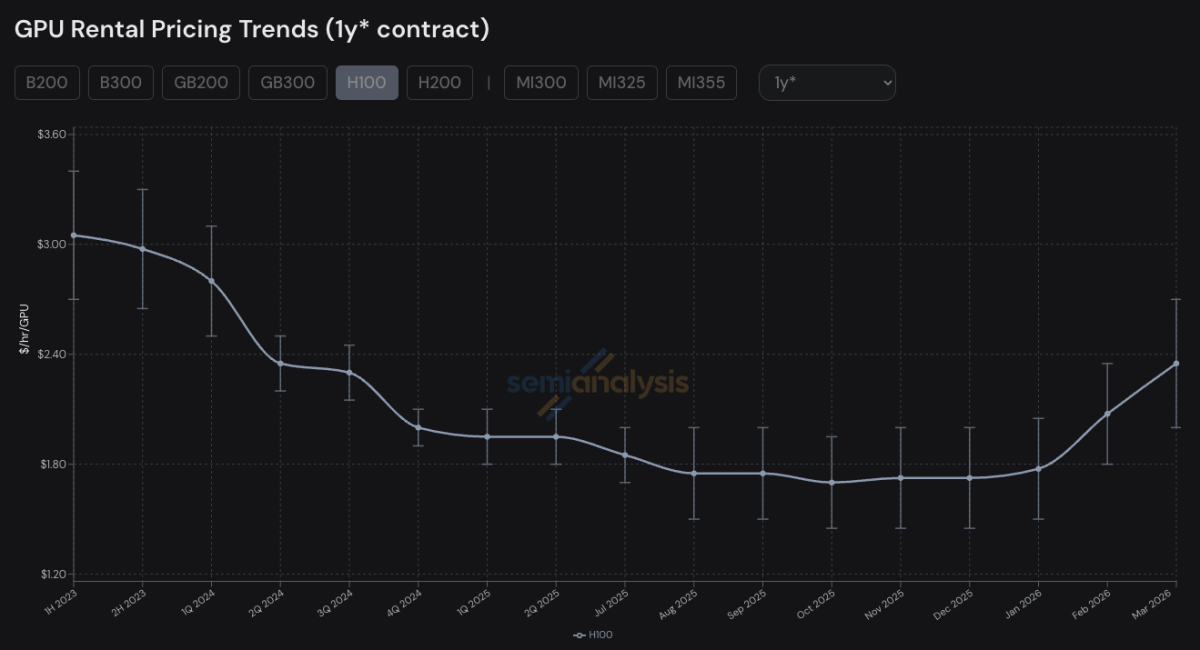
(Source: SemiAnalysis)
This index is constructed based on direct survey data collected monthly from over 100 cloud service providers and buyers and sellers of computing resources.
The latest report points out that on-demand GPU computing power across all types of GPUs has been sold out -- even with recent price increases, customers who have locked in on-demand instances are unwilling to release these computing resources back into the pool. The agency likened searching for GPU computing power in early 2026 to attempting to book a ticket on the 'last flight out': prices are high, and there are almost no available resources.
Researchers added: 'Customers are scrambling to purchase Amazon Web Services’ p6-b200 spot instances at $14 per GPU per hour, and some emerging cloud service giants (Neocloud Giants) are no longer offering single-node sales; some NVIDIA H100 GPUs are still being renewed at the original price signed two to three years ago, and some H100 contracts are being directly extended until 2028.'
As for the more advanced Blackwell chips? Researchers noted that due to robust demand for open-weight models and the continued surge in inference needs, the delivery lead time for newly deployed Blackwell chips is now extending to six to seven months.
Later in 2025, the market once expected that as the stronger-performing, lower-cost Blackwell chips accelerated deployment, rental prices for the Hopper chips (H100, H200) might see a significant drop. However, the latest situation is quite the opposite: not only does demand for the H100 remain strong, but in many cases, it is even increasing.
SemiAnalysis noted in its report that one of the key drivers of computing power demand at the beginning of this year was native media generation. For instance, ByteDance's Seedance (also known as Dream) and Google's Nano Banana have driven significant video/image creation and optimization, leading to a sharp increase in token throughput. A more prominent source of demand is the rise of multi-agent workloads, which has propelled token usage and computational power consumption into parabolic growth.
SemiAnalysis stated that they alone 'consumed billions of tokens in just the past week,' with costs around $5 per million tokens. Nevertheless, the company expressed satisfaction, noting that the time saved, along with the expansion of workflows and capabilities, far outweighs the cost of computational power.
The report also highlighted that the tightening supply and rising prices of computational power are disconnected from broader market sentiment. The stock prices of emerging cloud service providers like CoreWeave and NEBIUS are currently at the lower end of their range over the past six to twelve months. The analysis pointed out that the market remains anchored to the narrative framework of 'an eventual oversupply and commoditization of computational power.' However, the reality is that under aggressive supply constraints, nearly all types of computational resources will remain in strong demand—regardless of their relative performance differences.
Looking ahead, researchers outlined three key observations to assess whether GPU rental prices will remain high.
First, as GB300 clusters gradually ramp up throughout 2026, the market will focus on whether the new supply can alleviate the current computational power crunch. Second, attention must be paid to whether the ongoing chip shortage worsens further. Lastly, it is important to monitor the annual recurring revenue (ARR) growth of major AI giants, as well as the pace of AI application adoption and the continued growth trajectory of token consumption.
Editor/Liam