The blockade of the Strait of Hormuz for over a month, combined with Trump's tough stance breaking ceasefire expectations, has caused the global oil market to experience its most severe shock in 18 years. Spot Brent crude surged to $141.37, reaching a new high since 2008; WTI's single-day increase reached 13.8%, and the near-month spread widened to a record-breaking $16. The International Energy Agency characterized this as "the most severe supply shock in oil market history," with inflation and recession casting dual shadows over the global market.
A blockade of the Strait of Hormuz lasting over a month, compounded by Trump's hardline remarks shattering market expectations that the conflict would end soon, has sent the global physical crude oil market into its most severe price shock in over eighteen years.
On April 2, the spot Brent crude price hit $141.37 per barrel, the highest level since 2008, surging significantly from the previous day's price above $128. This price also surpassed the peak during the outbreak of the Russia-Ukraine conflict in 2022.
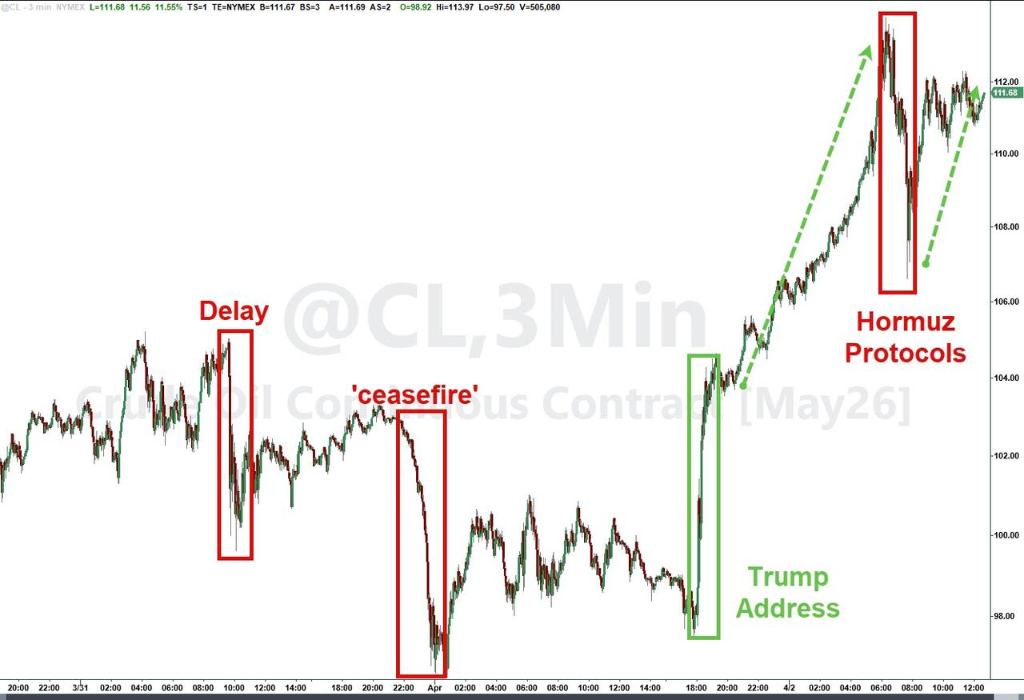
 At the same time,$Crude Oil Futures (MAY6) (CLmain.US)$The May contract's single-day maximum increase reached 13.8%, with the U.S. crude settlement price breaking through $110 per barrel for the first time since 2022.
Trump's televised national address delivered a strong signal, causing the market to rapidly unwind short positions that had bet on a swift end to the conflict, serving as the direct trigger for this round of soaring oil prices. The International Energy Agency has characterized this crisis as "the most severe supply shock in oil market history," but its duration remains difficult to predict.
The gap between physical oil prices and futures prices has widened sharply.
Spot Brent is one of the most important crude oil pricing benchmarks globally, widely used to guide the pricing of about two-thirds of the world’s physical crude oil trade. Unlike the benchmark Brent futures traded on the Intercontinental Exchange, spot Brent reflects the actual transaction prices of North Sea crude oil scheduled for immediate shipment—namely, the physical price with confirmed shipping dates.
On Thursday, spot Brent climbed to $141.37, while Brent futures were still trading around $107 on the same day, showing an unusually wide spread. This gap stems from fundamentally different pricing logic between the physical and futures markets: the former directly reflects the scarcity of currently deliverable barrels, while the latter is primarily driven by financial trading, focusing more on "paper barrels" rather than physical ones.
The spot premium in the North Sea region has risen to historic highs in recent days, with traders fiercely bidding for every available cargo. This is the core driving force behind spot Brent prices deviating from futures and surging rapidly.
WTI's near-month spread hits a record high amid urgent supply concerns.
Tension signals in the U.S. crude oil market have also intensified sharply. The near-month spread of WTI crude—the price difference between the two nearest expiring contracts—widened to over $16 per barrel on Thursday, marking the largest premium on record.
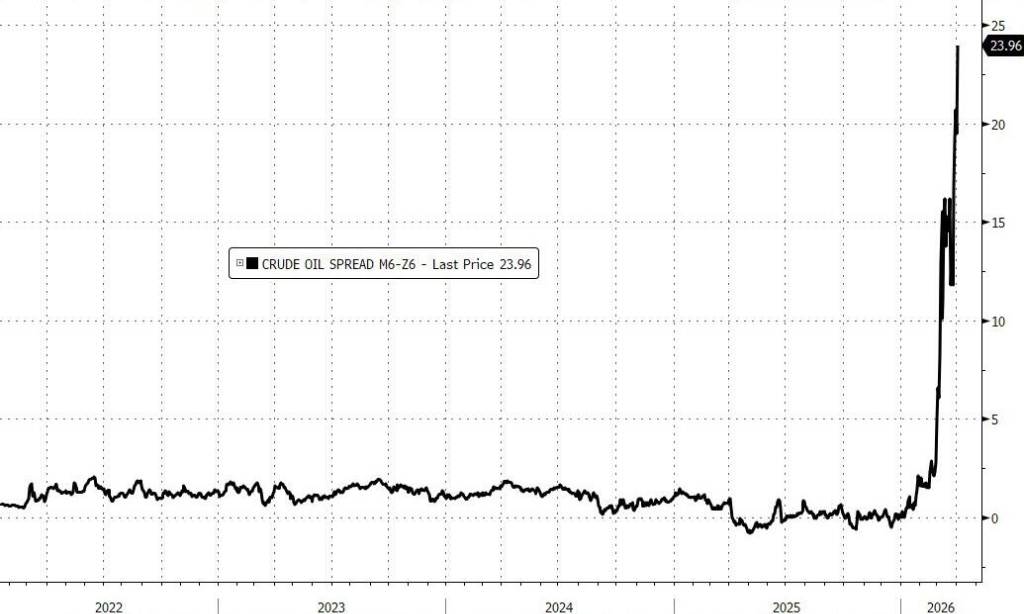
Frank Monkam, head of macro trading at Buffalo Bayou Commodities, stated, "The war premium following Trump's speech is concentrating in the near-term contracts, causing a sharp widening in the near-term spreads."
When the price of near-term contracts far exceeds that of forward contracts, the market typically interprets this as pricing in extreme tightness in the near-term physical supply. Traders noted that the surge was driven by two forces: forced liquidation of short positions betting on a quick end to the conflict, and aggressive purchases of U.S. crude oil by buyers in regions such as Asia, amid expectations of a significant tightening in U.S. crude oil supply in the coming weeks.
The Strait of Hormuz has been blocked for over a month. The strait carries nearly a quarter of the world’s oil and natural gas shipments, with severely restricted passage, prompting refiners to scramble for any available alternative sources.
In addition, U.S. oil prices have nearly doubled since the beginning of the year. Domestic retail gasoline prices in the U.S. have surpassed $4 per gallon, reaching their highest level since 2022, leading to rising inflationary pressures. The sustained spike in oil prices is fueling market concerns about a simultaneous rebound in inflation and slowdown in economic growth, creating a more complex macro-pricing environment for investors.
Editor/Melody