
①Veteran Wall Street figure Jim Paulsen believes that despite a poor start to the stock market due to concerns over the US-Iran war and artificial intelligence, a new bull market may be on the horizon; ②He highlighted five bullish signals: rising stock market volatility, substantial cash on the sidelines, a decline in the ratio of put options to call options, a decrease in consumer debt-to-income ratios, and a surge in the unemployment growth rate.
Amid the U.S.-Iran war, the prospect of the U.S. stock market appears particularly bleak. However, a senior Wall Street figure remains highly confident, believing that a new bull market "may be on the way."
Seasoned market observer and former Chief Investment Strategist at Leuthold Group, Jim Paulsen, stated that he has observed signs indicating the market is moving toward a "refreshed" bull market. Despite a weak start to the year for stocks, with the S&P 500 index down approximately 4% year-to-date due to concerns about artificial intelligence and heightened geopolitical tensions, particularly the Iran conflict.
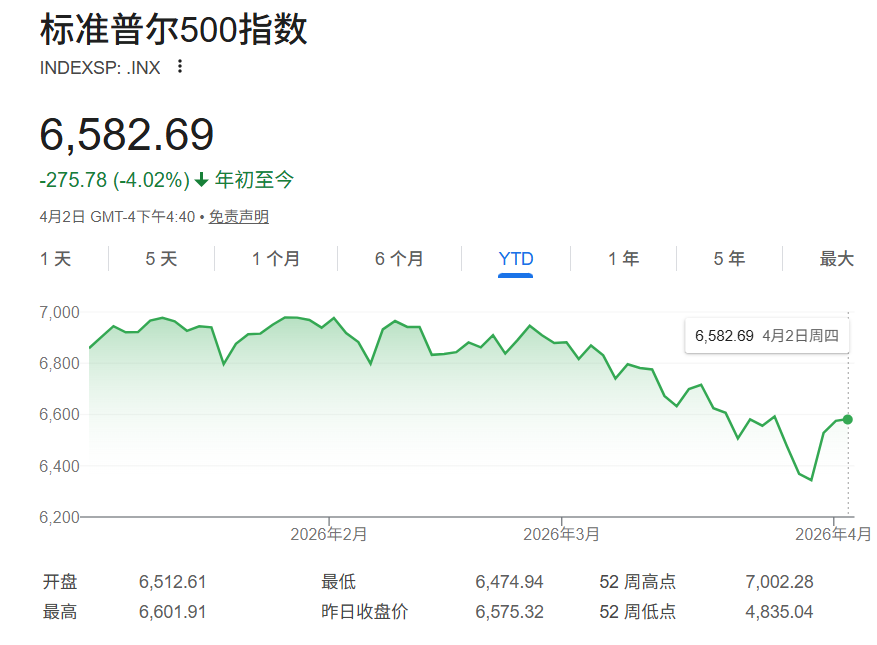
 At the beginning of this week, investors were optimistic about the end of the war, but their optimism quickly evaporated after President Trump delivered his latest remarks on Iran yesterday, even vowing to bomb Iran back to the Stone Age, causing major indices to plunge significantly during trading.
Paulsen wrote in a Thursday post on Substack, "I am not saying that the stock market downturn has ended. But what surprises and impresses me is that so many indicators are currently flashing bullish signals! Not just simple bullish signals, but also a large number of indicators showing signals typically only seen before a new bull market emerges."
"Given so many signs indicating that a new bull market may be about to start, I would rather take the risk of staying in the stock market than exit," he added.
Below, he emphasized five of the most significant bullish signals:
1.Sharp rise in stock market volatility
The VIX index, which measures stock market volatility, appeared to peak at around 31 last week. Paulsen noted that historically, spikes in this index have often been a good signal that the stock market is nearing a bottom.
He further added that in the past, when the VIX index fluctuated around 30, it was often accompanied by "several historic excellent buying opportunities" in the market.
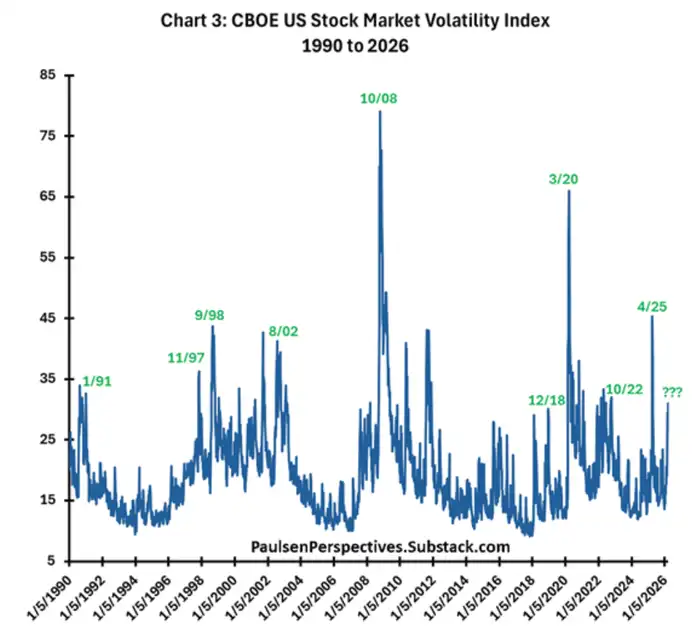
"Of course, volatility may rise further, but current market signals suggest that the current level of volatility is close to levels seen during the emergence of several past 'bull markets.' The current level of volatility indicates that the market is no longer complacent, which is often the moment when a bull market awakens," he wrote.
2. A large amount of cash remains on the sidelines
Paulsen pointed out that there is currently a significant amount of cash on the sidelines in the market, which could provide momentum for future bull markets. Data from the Investment Company Institute, the world’s leading association for asset management, showed that total assets in money market funds slightly declined last week to $7.8 trillion but remained near record highs.
He noted that the 'surge in liquidity' within money market funds is similar to the liquidity surges observed before the start of bull markets in 1992, 2002, 2009, and 2020.
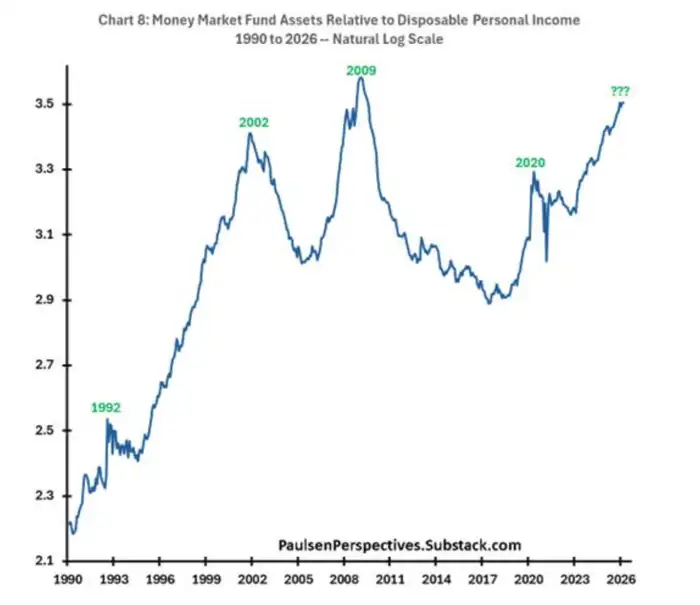
"Bulls love unused purchasing power, and an abundance of available funds tends to keep bears silent!" he added.
3. Significant decline in the put-call ratio in the stock market
Investors are buying more put options (which provide downside protection when the market falls) rather than call options (which profit when the market rises). Paulsen noted that, despite this, the ratio of put options to call options in the market has fallen to levels seen before previous bull market runs.
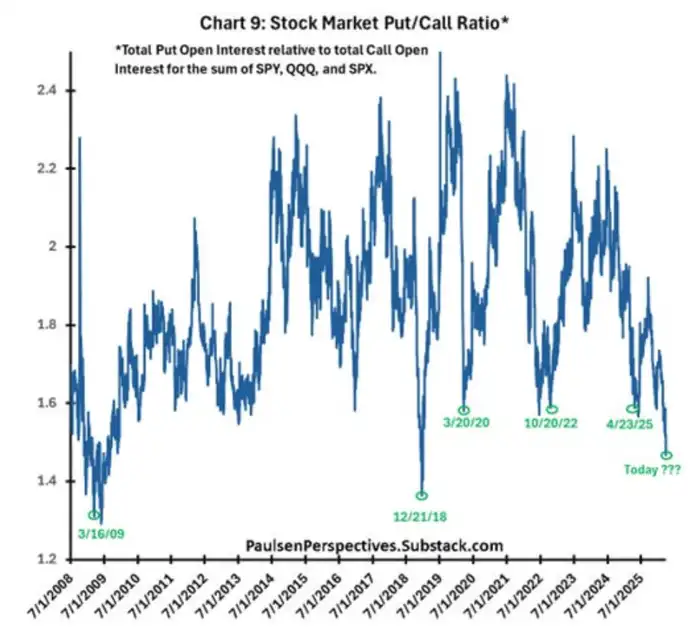
"The current put/call ratio is at or below the starting levels of major stock market rallies over the past 20 years. Bulls like to render investor insurance (puts) worthless, while bears often need more calls to take action," he stated.
4. Significant decline in consumer debt-to-income ratio
Paulsen stated that historically, when the ratio of consumer debt to income declines sharply, it is typically a bullish signal for the stock market. He cited an analysis of the S&P 500 Index and this ratio over the past 60 years.
He further explained that, excluding the impact of the pandemic, the ratio of consumer debt to income is currently hovering near its lowest level in 25 years and appears poised for a 'recovery,' which should also boost the stock market.
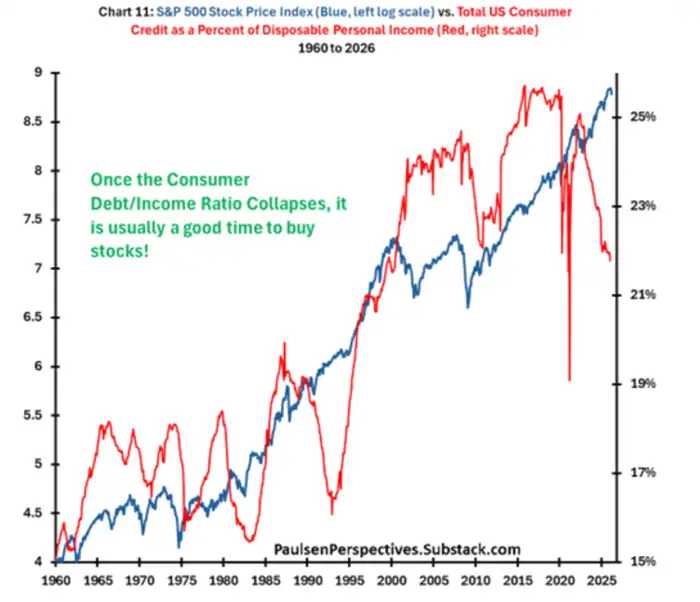
"Since 1960, every time the ratio of consumer debt to income has started to rise, a bull market has taken control of the stock market!" he added.
5. The growth rate of unemployment soars
Paulsen stated that although rising unemployment is generally considered unfavorable for the stock market and the economy, past periods of sharp spikes in unemployment have actually been associated with strong market growth.
He further noted that the three-year growth rate of the U.S. unemployment rate is currently hovering around levels seen before the pandemic-induced stock market rally, after the financial crisis, and during the early 2000s.
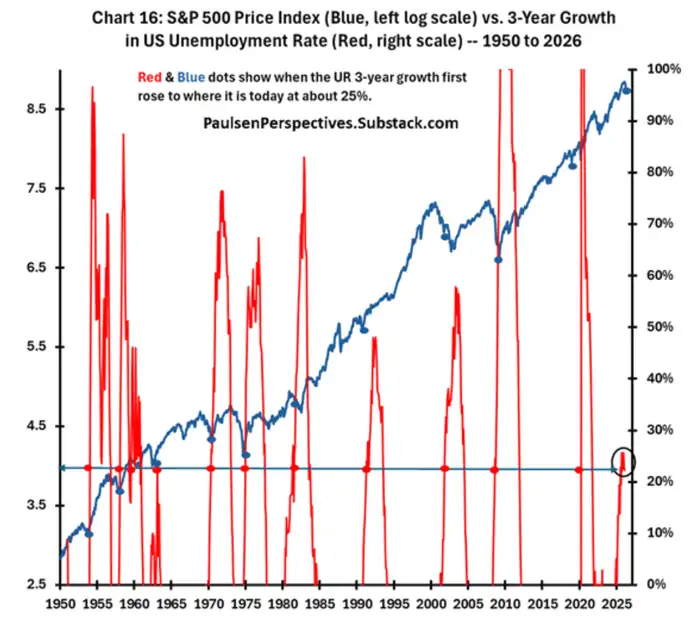
"As we have observed, in the post-war era, any increase in the unemployment rate of 25% over a three-year period tends to have a positive impact on the stock market!" he wrote.
Editor/Doris