
From negative to explosive growth, the U.S. added 178,000 nonfarm jobs in March, the highest since December 2024. The unemployment rate unexpectedly declined, while wage growth slowed. Bets on Federal Reserve interest rate cuts cooled, and the dollar index surged above 100 in the short term.
At 20:30 Beijing time on Friday, the U.S. Bureau of Labor Statistics released the March non-farm payroll report, which showed a significant increase in employment and a marked improvement in the labor market due to the end of strikes in the healthcare sector and warmer weather.
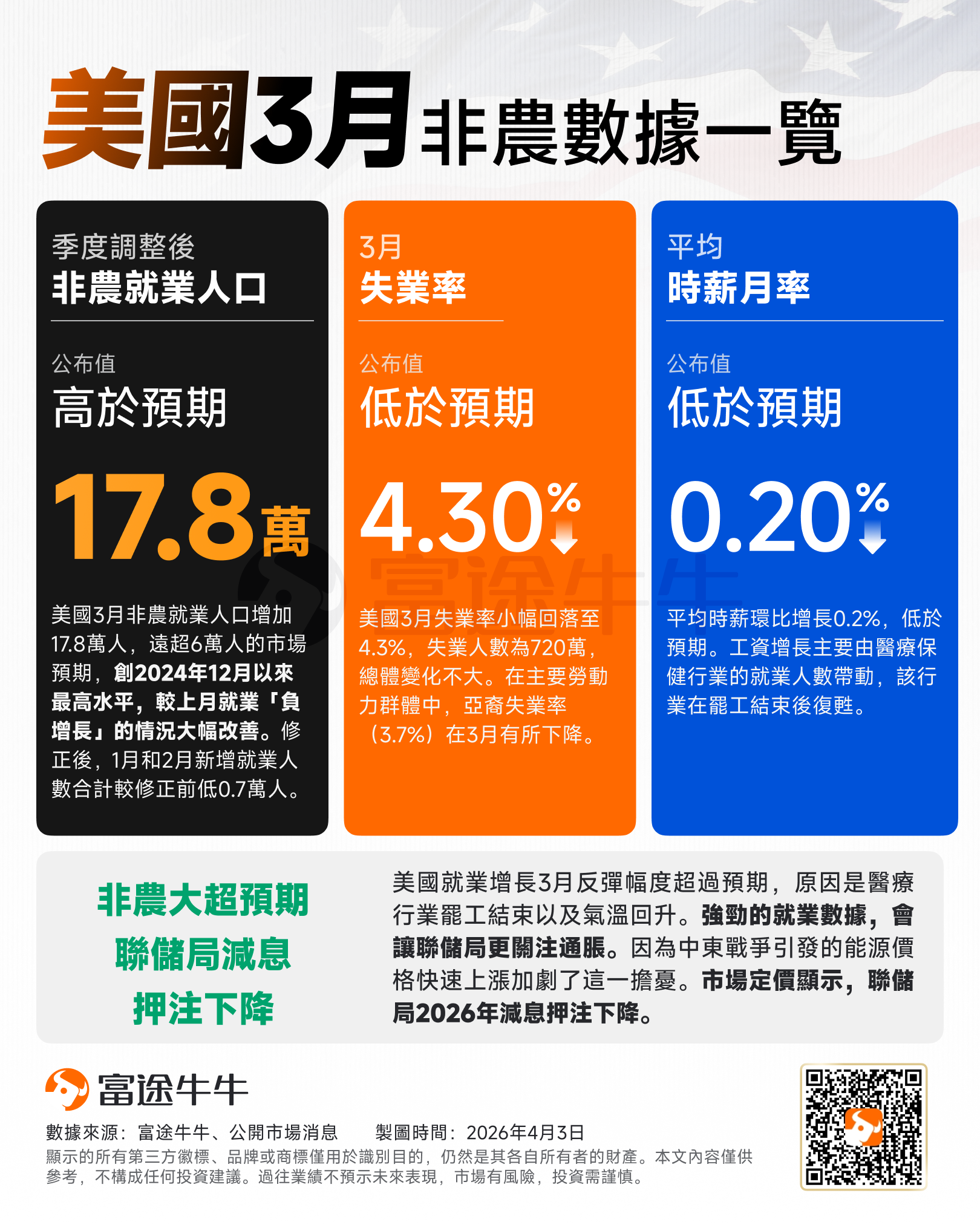
The seasonally adjusted U.S. non-farm payroll employment increased by 178,000 in March, far exceeding market expectations of 60,000, marking the highest level since December 2024. This represents a substantial improvement from the previous month's 'negative growth,' with the prior figure revised down from -92,000 to -133,000.
 Meanwhile, the unemployment rate in the U.S. edged down to 4.3% in March, compared with market expectations of remaining unchanged at 4.4%. The annual and monthly rates of average hourly earnings in the U.S. for March came in at 3.5% and 0.2%, respectively, below forecasts of 3.7% and 0.3%. The previous figures were 3.8% and 0.4%, respectively.
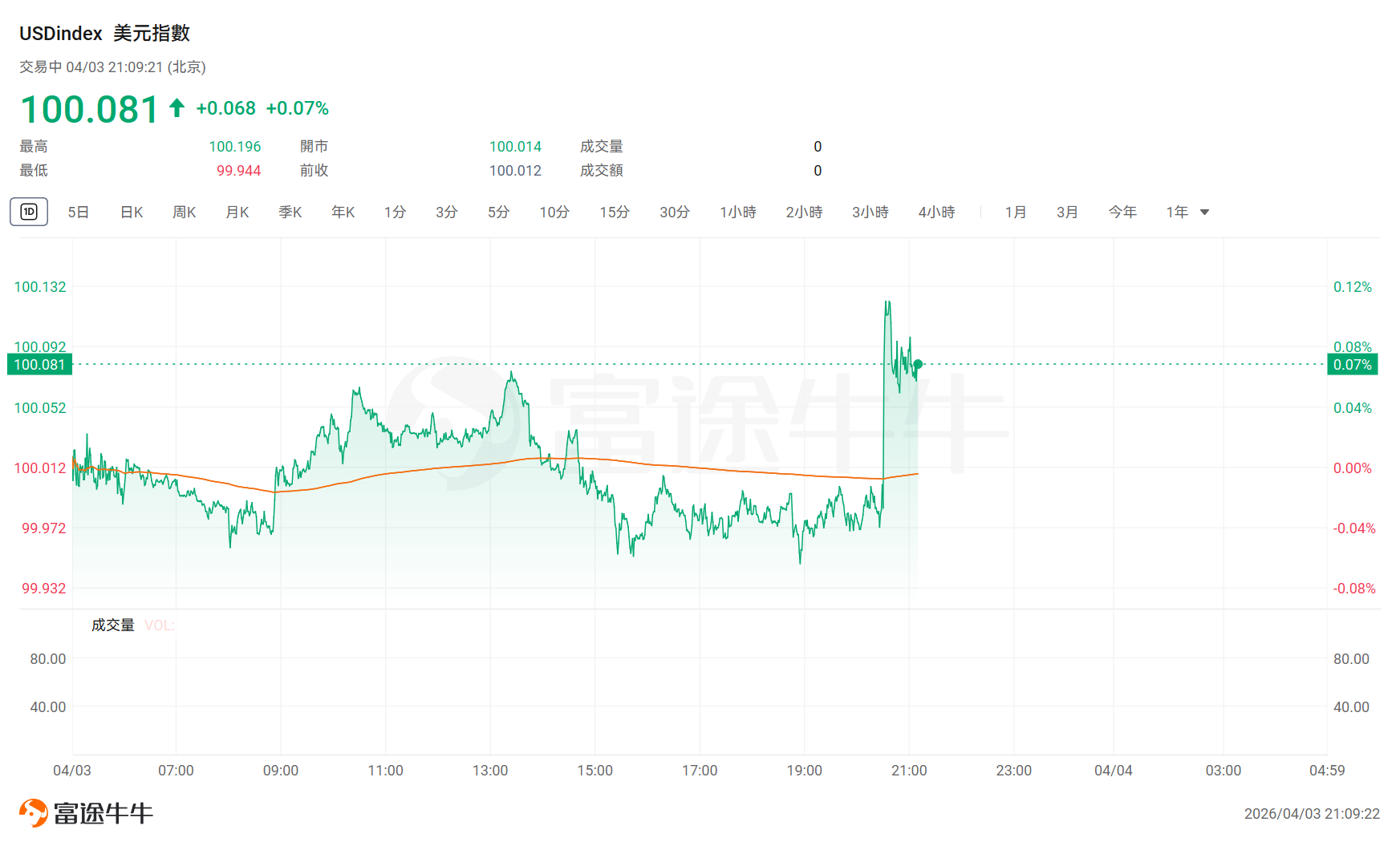
Following the release of the non-farm data, the U.S. dollar index surged significantly in the short term, reaching a high of 100.1. Non-U.S. currency pairs fell broadly, with EUR/USD and GBP/USD dropping nearly 30 points in the short term. Market pricing indicated a decline in bets on Federal Reserve interest rate cuts by 2026.
The U.S. Bureau of Labor Statistics noted that job growth last month was concentrated in the healthcare, construction, and transportation and warehousing sectors. The number of federal government employees continued to decline.
Specifically, in March, the healthcare sector added 76,000 jobs. Employment in outpatient healthcare services increased by 54,000, including 35,000 workers returning to their positions in doctors' offices after the end of the strike. Hospital employment also rose, adding 15,000 jobs. Over the past 12 months, the healthcare sector has averaged 29,000 new jobs per month.
Regarding data revisions, January's non-farm payroll employment increase was revised upward from 126,000 to 160,000, while February’s was revised downward from a decrease of 92,000 to a decrease of 133,000. After revision, the combined total of new jobs for January and February was 7,000 lower than before the revision.
According to Investing.com, adding 178,000 jobs in March is a commendable achievement, especially when compared with expectations. This significant disparity suggests that the U.S. economy outperformed analysts’ projections, demonstrating stronger-than-expected job creation capabilities. Such results are typically viewed as a positive signal for the U.S. dollar, indicating increased consumer spending potential and overall economic vitality.
However, institutional analysis also pointed out that with the uncertain prospects of war with Iran, downside risks to the labor market are rising. Economists had widely anticipated a rebound in the labor market in March following the end of the strike. In February, the loss of over 30,000 healthcare workers and severe winter weather led to a sharp decline in unemployment. This robust growth may further intensify the Federal Reserve's focus on inflation risks, as concerns have been heightened by the rapid rise in energy prices triggered by the Middle East conflict.
A financial markets reporter for The New York Times based in New York stated that stock markets were closed today due to the Easter holiday, but bond markets remained open, with trading continuing until noon local time. Investors initially seemed to interpret the new data as allowing the Fed to focus on reducing inflation against the backdrop of a still-solid labor market. This likely implies higher interest rates. The yield on two-year U.S. Treasury bonds, which is sensitive to changes in interest rate expectations, surged significantly to 3.85% after the data release.
David Robin, interest rate strategist at TJM Institutional Services LLC, stated that the Federal Reserve is "highly likely to keep interest rates unchanged until the end of June, or even longer." He added, "This is data from before the outbreak of the conflict, but even so, it indicates a higher (rate cut) baseline."
 Stay ahead with key financial updates and discover investment opportunities early! Open Futubull > Market > US Stocks >Economic Calendar/Selected macroeconomic data, seize the investment opportunity!

Editor/Lee