The situation is volatile!
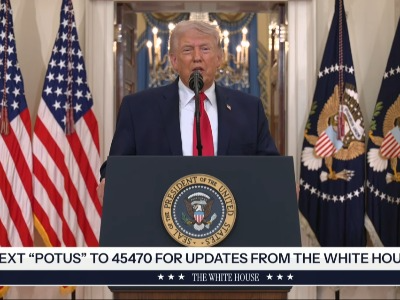
On April 3, according to a report by Xinhua News Agency, U.S. President Trump posted on social media: "Give us a little more time, and we will be able to easily open the Strait of Hormuz, seize the oil, and make a huge profit."
According to CCTV News on April 3 local time, three large merchant ships operated by Oman have successfully passed through the Strait of Hormuz recently. The fleet reportedly consisted of two ultra-large crude carriers and one liquefied natural gas (LNG) carrier. Based on relevant tracking data, the three ships have arrived at the outer sea of Muscat, Oman, and completed their entry into port. Data shows that each of the two oil tankers carried approximately 2 million barrels of crude oil, while the LNG carrier appeared to be empty. It is understood that these three ships are managed by Oman Ship Management Company, which has not yet commented on the matter.
 In addition, the latest information indicates that Israel's largest natural gas field, Leviathan, has resumed production, which may provide some relief to a tight supply market. After the conflict erupted on February 28, Israel temporarily shut down some natural gas fields for security reasons. Reportedly, Leviathan, operated by Chevron, is located in the Eastern Mediterranean and represents Israel's most critical natural gas asset as well as a key source of natural gas supply to Egypt.
The Iranian military issued a statement saying that if the United States dares to target Iran’s infrastructure, Iran will destroy “all assets and infrastructure” belonging to the U.S. and Israel in the Middle East. This statement was a response to recent repeated threats by U.S. President Trump to damage Iran’s bridges, power stations, and energy infrastructure.
Iran issues a warning
According to reports from Xinhua News Agency citing Iranian media on April 3, the Iranian military issued a statement saying that if the United States dares to target Iran’s infrastructure, Iran will destroy “all assets and infrastructure” belonging to the U.S. and Israel in the Middle East.
The statement said that if these threats were to be implemented, Iran would destroy “all assets and infrastructure” of the United States and Israel in the Middle East; the scope of strikes could further extend to “key assets of America’s followers in the Middle East.”
The statement also mentioned that countries hosting U.S. military bases, if they wish to avoid being affected, should prompt the withdrawal of U.S. forces from their territories.
On April 3 local time, Commander of the Iranian Army Ali Jahan Shahi issued a warning to the U.S. and Israel on social media, stating that enemy troops would be sent “back to before the Stone Age.”
Jahan Shahi also claimed that Iran’s army special forces have maintained a high state of alertness over the years and undergone intensive training. “Iran’s land is the graveyard of invaders—if you don’t believe it, come and try.”
The day before, Abolfazl Shekarchi, spokesperson for the Iranian Armed Forces, stated in an interview that the Strait of Hormuz would remain closed to the United States and Israel. Trump's initiation of war against Iran was based on flawed calculations. Iran is prepared for any ground operation by the U.S., at which point Iran will teach the U.S. a lesson, ensuring it never entertains aggressive intentions toward any nation, even the weakest in the world.
Shekarchi emphasized that the Iranian Armed Forces are ready and waiting for the U.S. military to engage in close combat, where they will inflict a disaster upon the Americans, deterring future generations from voluntarily enlisting in the military.
Kuwait power and desalination plant attacked
According to Xinhua News Agency citing the Kuwait News Agency on April 3, spokesperson Fatima Hayat of Kuwait's Ministry of Electricity, Water, and Renewable Energy stated that an attack launched by Iran on that day caused damage to a Kuwaiti power and desalination plant.
The report noted that technical and emergency teams have immediately begun handling the incident to ensure continued operation of the equipment.
On the same day, a fire broke out at the Habshan natural gas facility in the UAE. It was reported that the facility has been temporarily shut down. No casualties have been reported so far. This marks the second closure of the natural gas facility since the outbreak of hostilities in the Middle East at the end of February.
The Habshan natural gas facility is one of the UAE’s critical energy infrastructures, responsible for natural gas processing and transmission functions.
According to CCTV News, northern Israel was struck by Iranian missiles on the morning of April 3 local time. The Israeli Defense Forces assessed that the ballistic missiles launched by Iran were equipped with cluster warheads.
It was reported that there were six impact sites in Haifa and Kiryat Ata. In Kiryat Ata, munitions struck a residential building, injuring one person and igniting fires in two vehicles; some roads in Haifa were damaged, with no reported casualties thus far.
Morgan Stanley: Global LNG market extremely tight
Morgan Stanley stated in its latest report that the global LNG market has entered an extremely tight phase, with approximately 20% of supply still offline. The 'in-transit inventory' that departed from Qatar before the conflict has been largely delivered, implying that the spot market will become even tighter in April.
Morgan Stanley analyst Devin McDermott noted that even if the situation eases in the short term, the significant supply gap will continue to exert pressure on global markets to replenish inventories, which will sustain upward momentum for prices.
Morgan Stanley indicated that the global LNG market is expected to face a supply shortfall of approximately 15 million tons (around 4%) by 2026. The bank originally anticipated a 'supply surplus' during 2027-2028, but this projection has been offset by prolonged disruptions in Middle Eastern supply and project delays.
The Middle East disruption lies at the core of this supply crisis. The ongoing blockade of the Strait of Hormuz caused by the war affects about 20% of global LNG shipments, with roughly 70% of these volumes destined for Asia.
Since March, LNG exports from Qatar and the UAE have been largely interrupted. Qatar, one of the largest LNG exporters globally, accounts for approximately 19% of total global exports, while the UAE accounts for about 1%.
According to assumptions made by Morgan Stanley analysts, Qatar and the UAE’s export facilities will undergo a complete shutdown lasting two months (March to April); the two damaged production lines (12.8 mtpa) at Ras Laffan (home to the world's largest LNG plant) may face long-term shutdowns of 3 to 5 years (until 2028); the startup of the North Field gas field expansion project is now expected to be delayed until July 2027 (originally planned for the end of 2026).
In addition to Qatar, Australia and the United States are also major global LNG exporters. However, analysts have noted that short-term increases in supply will be unable to compensate for the shortfall in the Middle East.
Excluding the Middle East, global LNG production capacity utilization reached as high as 99% in March, up from 97% last year and above the five-year average of 91%. In April, it is expected to be approximately 95%. This indicates that global LNG production capacity is operating near full capacity, with no elastic supply available.
Morgan Stanley holds a bullish outlook on LNG prices for 2026, significantly higher than the forward curve forecasts.
Analysts predict that the JKM price (Asia’s LNG benchmark) will reach $30/mmbtu in the third quarter of 2026 and further rise to $32.50/mmbtu in the fourth quarter.
MMBtu (million British thermal units) is a commonly used international unit of measurement for energy heat content, representing one million British thermal units (Btu).
Editor/Lambor