
The US military lost two fighter jets, an F-15E and an A-10, in a single day. The former was shot down within Iranian territory, and the US rescue operation failed. Iranian media reported that the pilot may have been captured. Captures of US military personnel have often become turning points in wars, such as during the 1993 'Black Hawk Down' incident in Somalia, where a captured pilot directly led to the US terminating operations and withdrawing completely.
Within a single day, the US military lost two fighter jets, rescue operations were obstructed, and ceasefire negotiations reached an impasse — this Middle East conflict, which has lasted nearly five weeks, continues to escalate.
On April 3 local time, the US military lost two fighter jets over Iran and nearby waters. According to CCTV News, an F-15E fighter jet was shot down inside Iran, while an A-10 attack aircraft crashed near the Strait of Hormuz. This marked the first known crash of a US fighter jet inside Iran since the US and Israel launched military actions against Iran on February 28.
 The US immediately initiated a search-and-rescue mission. According to CCTV News, the US military deployed Black Hawk helicopters and C-130 transport planes to conduct rescue operations inside Iran. However, one helicopter was attacked by Iran's air defense system and forced to withdraw, resulting in the failure of the rescue mission. Iranian media reported that after ejecting, the F-15E pilot landed within Iranian territory and may have been captured by the Iranian military.
Meanwhile, ceasefire negotiations between the US and Iran have reached a deadlock. Iran refused to meet with the US in Islamabad and responded to the US 48-hour ceasefire proposal with sustained heavy firepower on the battlefield. Trump stated that the shooting down of US military aircraft would not affect negotiations with Iran.
If a US pilot is captured, it could become a pivotal turning point in this conflict. For instance, during the 1993 'Black Hawk Down' incident in Somalia, two US helicopters were shot down, and a pilot was captured, which directly led to the termination of the US operation and a full withdrawal.
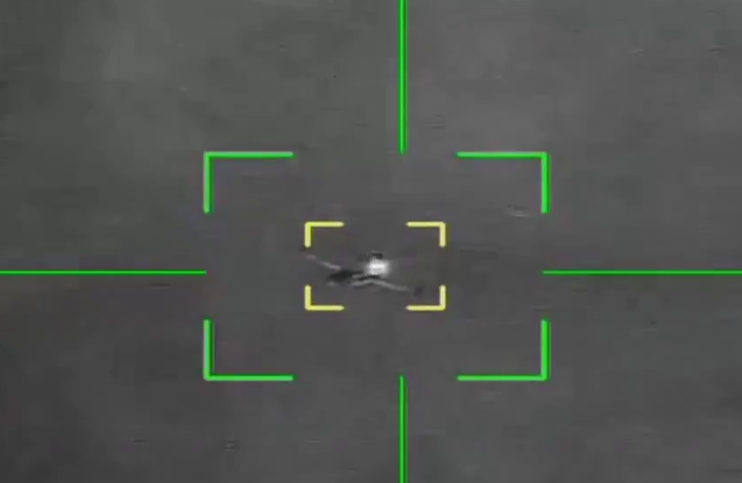
Iran Releases Footage of the Moment It Shot Down a U.S. Air Force A-10 Attack Aircraft – Video Screenshot
F-15E Shot Down Inside Iran: Rescue Mission Fails, Pilot Missing, 'Possibly Captured'
According to CCTV News, Iranian sources reported that Iran’s Islamic Revolutionary Guard Corps shot down an advanced US fighter jet earlier in the day. The pilot ejected and landed within Iranian territory, and reports suggest that the pilot may have been captured by the Iranian military.
Iranian media released photos showing debris from the pilot's ejection seat near the crash site.
NR Jenzen-Jones, Director of Armament Research Services, a military technology intelligence consultancy, stated that the wreckage in the photos 'can be identified as belonging to a US Air Force F-15E Strike Eagle.' However, the available evidence is insufficient to confirm whether the aircraft was shot down or crashed.
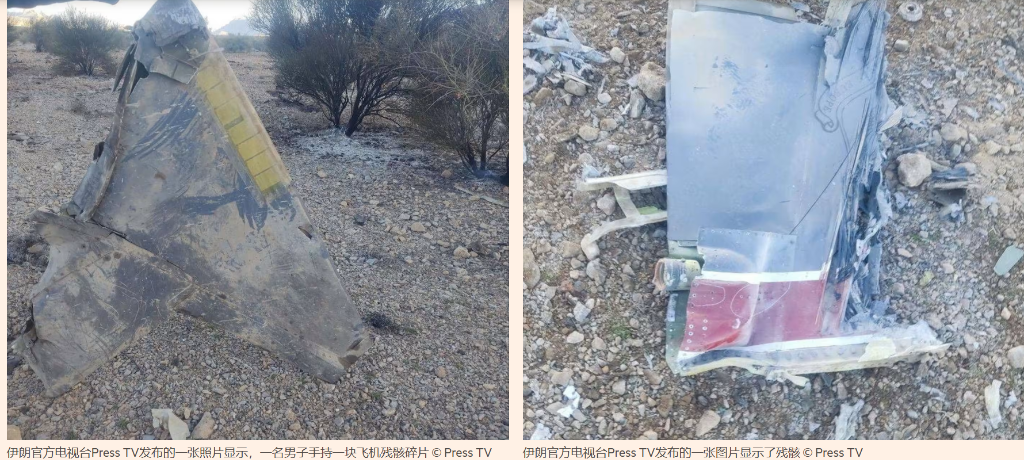
Iran has identified the crash site as being located in Kohgiluyeh and Boyer-Ahmad Province in the southwest. According to reports from CCTV News, the provincial governor called on residents in remote areas to actively search for surviving pilots, stating that "individuals or groups who successfully capture or neutralize enemy personnel will receive special commendation from the provincial government." Iran's Tasnim News Agency also urged local residents to "carry weapons" while patrolling mountains and plains to prepare for possible U.S. rescue teams. Additionally, reports indicate that U.S. authorities believe the pilot is still alive and had previously attempted to rescue him from Iranian territory.
According to media reports cited by Xinhua News Agency, U.S. military search-and-rescue aircraft and helicopters entered Iranian territory. One surviving pilot has been rescued and is receiving treatment, while another pilot remains missing. Search-and-rescue operations are ongoing.
A-10 Attack Aircraft Crashes; Tehran Subjected to Large-Scale Airstrikes
According to CCTV News, two U.S. officials confirmed on the 3rd that a U.S. A-10 attack aircraft crashed near the Strait of Hormuz. The aircraft carried only one pilot, who was successfully rescued. Iran’s Armed Forces Public Relations Department later announced that Iran’s National Integrated Air Defense Network successfully shot down the aircraft after tracking and monitoring it, referring to it as an "aggressive hostile force."
On the same day, Tehran was hit by large-scale airstrikes. The United States and Israel conducted airstrikes on multiple locations within Iran, targeting Shahid Beheshti University and Mehrabad Airport in the capital, Tehran. An attack on the port of Chabahar in southern Iran resulted in one death and damage to four vessels. This marked the second airstrike on the port within 24 hours.
In a statement issued on the 3rd, the Israeli Defense Forces announced that over the past 24 hours, the Israeli military had launched more than 70 airstrikes on western and central Iran, targeting dozens of sites including ballistic missile launch facilities, drone bases, and air defense systems. Meanwhile, Iran's Islamic Revolutionary Guard Corps announced that it had carried out the 93rd wave of attacks under Operation 'True Promise-4,' a large-scale military operation.
Turning Point? Historical Accounts of Captured U.S. Pilots: From Somalia to Afghanistan
The potential capture of U.S. pilots is not without precedent. Historically, incidents involving captured U.S. military personnel have often had profound impacts on the course of conflicts, sometimes even directly altering the outcome of entire military campaigns.
According to a report by the Financial Times, the 1993 incident in Somalia stands as one of the most representative cases. That year, two U.S. Black Hawk helicopters were shot down in Mogadishu, and one U.S. Black Hawk pilot was captured. This event effectively marked the end of months of U.S. military operations and ultimately led to the complete withdrawal of U.S. forces from Somalia.
Another well-known case occurred in Afghanistan. In 2009, U.S. soldier Bowe Bergdahl left his base without authorization and was captured by the Taliban. The U.S. military subsequently launched a large-scale search operation. Five years later, the Obama administration negotiated his release in exchange for freeing five senior Taliban prisoners.
The report analysis pointed out that any capture of U.S. military personnel by Iran would become a "critical turning point" in this war and provide Iran with "potentially significant leverage."
In addition, the report cited another incident from the ongoing conflict: On March 19, the Iranian Revolutionary Guard claimed that its air defense system had hit a U.S. F-35 fighter jet flying over central Iran, causing damage to the aircraft. The U.S. military subsequently stated that the aircraft made an emergency landing at an undisclosed location after a combat mission against Iran.
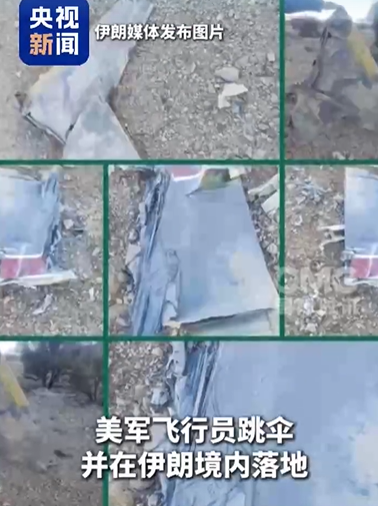
Screenshot from a CCTV News video
Iranian Speaker Mocks Downed U.S. Fighter Jet
According to reports by Xinhua News Agency, Iranian Parliament Speaker Mohammad Bagher Ghalibaf posted on social media on the 3rd, mocking the downing of a U.S. fighter jet by Iran.
Ghalibaf stated that following the enemy's claim of having "defeated Iran 37 times consecutively," this "self-proclaimed clever yet strategically void" war initiated by the United States and Israel has now degraded from plotting "regime change" to "Hey! Who can find our pilot?"
According to CCTV News, on April 1st, the U.S. side proposed a temporary 48-hour ceasefire through a friendly nation. After assessing the situation, Iran concluded that the U.S. had previously misjudged Iran's military capabilities, leading to an escalation that placed the U.S. military in severe difficulties in the region, prompting this proposal. Instead of responding in writing, Iran "replied on the battlefield by continuing heavy firepower strikes" and formally informed the mediator of its refusal to meet with U.S. officials in Islamabad, explicitly stating that the U.S. ceasefire request was "unacceptable."
According to reports by Xinhua News Agency, Trump stated during a telephone interview with NBC on the 3rd that the downing of the U.S. military aircraft "would not affect negotiations with Iran." The White House also stated on the same day that Trump had been briefed on the crash of the F-15E, and search and rescue operations were still ongoing.
However, Trump has recently sent mixed signals: On one hand, he claimed that the U.S. had "completely defeated Iran," while on the other hand, he threatened that if no agreement could be reached within two to three weeks, the U.S. would "strike every power plant in Iran." Meanwhile, Iran’s leadership has stated that there are currently no negotiations aimed at ending the conflict.
Editor/Melody