Goldman Sachs believes that although the market experienced significant volatility in March, indicators such as risk premium, volatility, and credit spreads have not reached levels seen during historical crises, meaning equity traders have yet to face a comprehensive test. It warns that the impact of a physical energy supply shortage is gradually unfolding, and the worst may be yet to come. Based on this, it recommends that the top priority at present is to preserve capital and wait for a clear window of opportunity to emerge after the crisis.
Goldman Sachs believes that although the current market has experienced volatility, it has not yet triggered a true repricing of risk.
This week, Tony Pasquariello, head of Goldman Sachs' hedge fund business, emphasized in his latest weekly market commentary that while various risk indicators appear to be under control, the potential for downside shocks remains far from fully released. Compared with previous market volatilities in history, equity traders have not yet faced a real test in this round of adjustment.
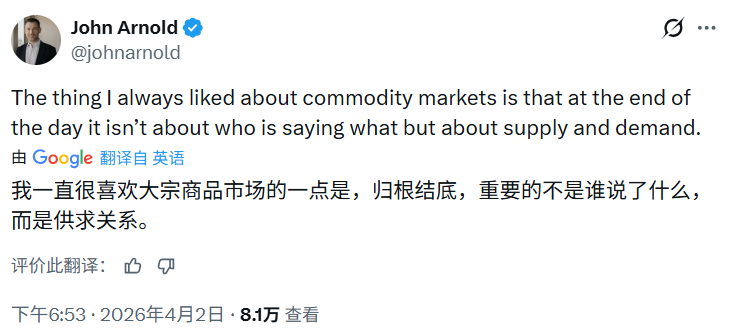
 Pasquariello believes that the statement which best encapsulates the current market condition is one made by John Arnold, co-chair of Arnold Ventures, on social media:
The allure of the commodities market lies in the fact that ultimately, what matters is not what people say, but supply and demand itself.
Moreover, Pasquariello pointed out that Goldman Sachs' data shows that the scale of client deleveraging in March was the largest in 13 years, and as of April, the overall market was in a significant net short position.
Nevertheless, he strongly advises that the top priority at present is to preserve capital and wait for the next clear entry signal. He stated:
The opportunity to make substantial profits during a crisis often arises after the crisis has passed.
Risk premiums remain moderate, but the 'worst moment' may not have arrived yet.
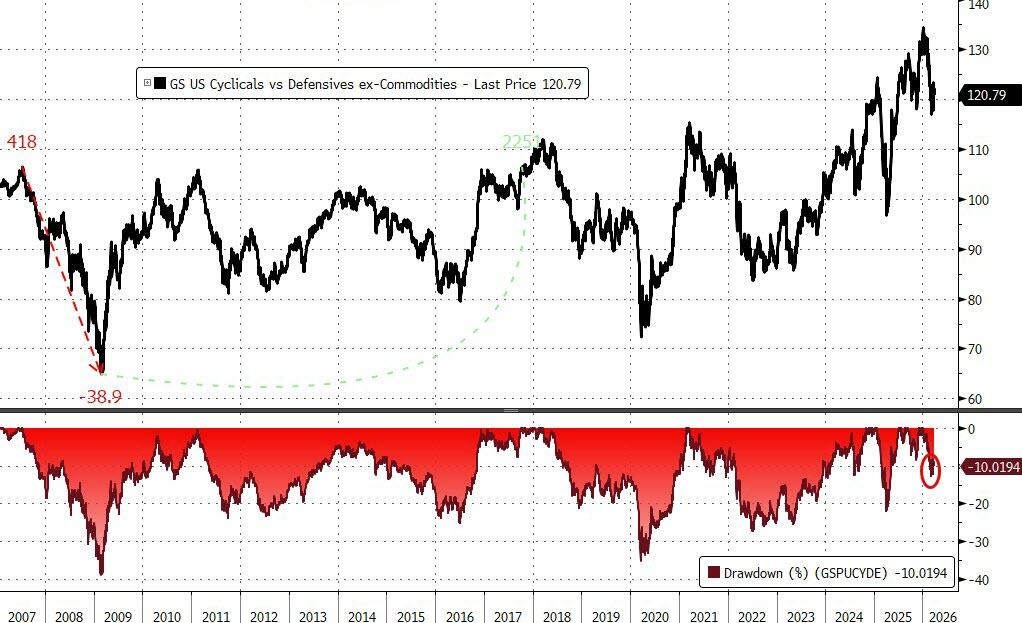
Pasquariello noted that based on several quantitative metrics, the intensity of this market turmoil has been lower than expected.
Forward volatility, the relative performance of cyclical stocks versus defensive stocks, and investment-grade credit spreads have not widened significantly to levels comparable to historical crises.
Pasquariello stated:
I’m not saying there was no chaos in March. What I mean is that stock traders have yet to face a comprehensive test.
Pasquariello outlined two opposing interpretations regarding the current resilience of the market.
The optimistic view argues that the market has not lost confidence in the sustainability of U.S. economic growth.
Data from Goldman Sachs strategist Ben Snider provides supporting evidence: earnings per share (EPS) forecasts for the S&P 500 index over the next 12 months have increased by a cumulative 6% from their peak and by 3% since the outbreak of the conflict, with continuous improvement in earnings expectations providing fundamental support for the market.
The concerned view, however, suggests that the market is simply overly complacent, with the real shock yet to arrive.
Tony Kim of Goldman Sachs pointed out that the last batch of oil tankers passing through the Strait of Hormuz at the end of February has just reached destinations in East Asia and Western Europe. The impact of physical energy supply shortages is only now beginning to fully materialize, and the most explosive convexity range of rising energy prices has yet to be unleashed.
Pasquariello frankly admitted that he was not fully confident in either the bullish or bearish perspectives. This week,$S&P 500 Index (.SPX.US)$a strong rebound was recorded against the backdrop of rising oil prices once again, a combination that itself reflects deep contradictions within the market.
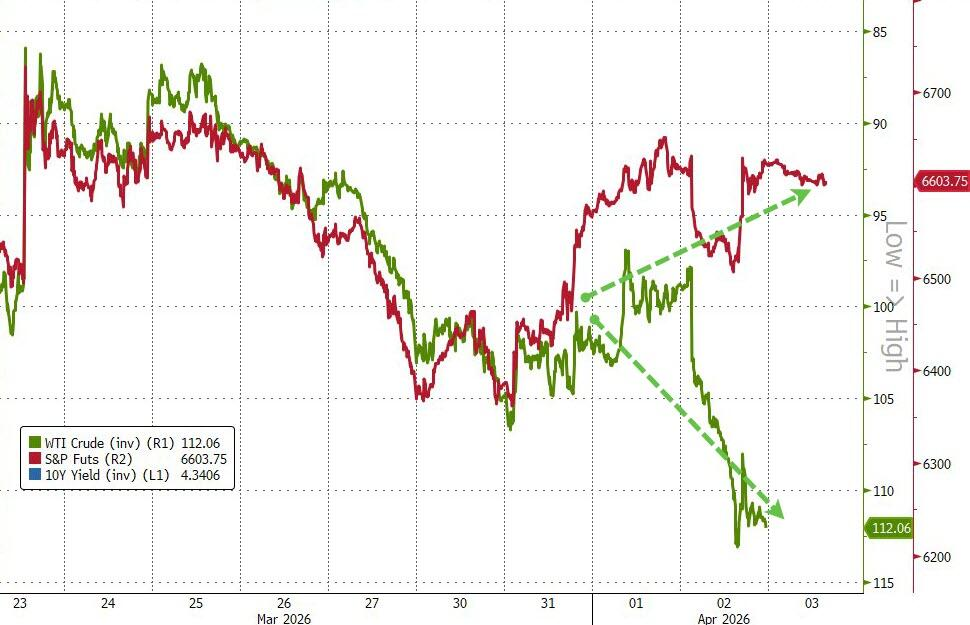
The shock of physical energy shortages may soon become concentrated and visible.
Beyond subjective judgment, Pasquariello cited objective data from Goldman Sachs derived from its own operations.
Data from Goldman Sachs' prime brokerage shows that hedge fund clients' selling scale in March was the largest in nearly 13 years. This indicates that the trading community significantly reduced long positions in March and entered April with a substantial short position.
Pasquariello believes that although this data does not guarantee any directional conclusions and only represents a specific type of market participant, it suggests that the risk-reward structure at the tactical level is relatively more balanced compared to a month ago.
He summarized the core contradiction as follows: the market is facing the largest oil supply disruption in history, but at the same time, a single major headline could trigger fierce short-covering. He referred to this state as 'strategic ambiguity.'
In terms of volatility, Pasquariello believes that even if the VIX has peaked, tail risks on both the upside and downside remain present simultaneously.
On one hand, if the crisis continues to evolve into a full-scale economic growth shock, the downside risk cannot be underestimated.
On the other hand, once there is a 'step-down' type of diplomatic or policy breakthrough, the upside tail risk is equally not to be ignored.
Based on this assessment, he maintains a conservative stance, emphasizing that the current priority is capital preservation, reserving capacity to respond to opportunities in the next phase.
Prioritize capital preservation and patiently await the post-crisis deployment window.
Looking ahead, Pasquariello predicts that three themes will continue to dominate the market after risk mitigation:
First, the AI investment boom will not fade. Identifying the direction is easy, but execution is more challenging. Pasquariello stated that he will adhere to a paired trading strategy of AI leaders versus laggards.
Secondly, the financing needs for electricity and infrastructure will surpass previous expectations. A pattern similar to that of 2022 is re-emerging, as the structural costs of long-term underinvestment in basic industries and the lack of supply chain diversification are being realized. The strategic value of energy infrastructure will become even more prominent.
Thirdly, the resilience of the Japanese stock market deserves attention. The Japanese stock market is both a cyclical asset and highly dependent on energy imports, and it is widely held by traders. Despite multiple adverse factors, its performance over the past month has still been impressive. Pasquariello believes that the two major themes attracting capital inflows into Japan—AI and defense—will continue into the next phase.
Concluding with Darwin's theory of evolution, Pasquariello brought this week's market observation to a close:
It is not the strongest or the most intelligent that survive, but those most adaptable to change.
Editor/Melody