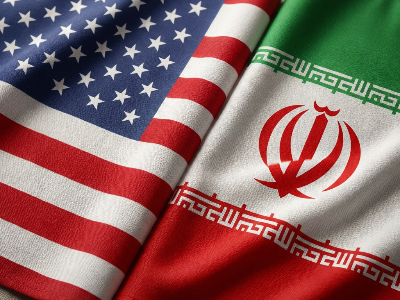
The escalation of the US-Iran conflict saw Trump issue a 48-hour ultimatum, demanding Iran open the Strait of Hormuz by April 6 or face 'catastrophe.' In a strong rebuttal, Iran announced eight strategic bridges in Kuwait, Saudi Arabia, the UAE, and Jordan as potential retaliation targets, posing an unprecedented threat to global energy security.
The US-Iran conflict has entered a new phase, with the intensity of confrontation sharply escalating. The safety of the global energy lifeline and Gulf region infrastructure is facing an unprecedented threat.
According to Xinhua News Agency, US President Trump posted on social media on April 4, demanding that Iran reach an agreement or open the Strait of Hormuz within 48 hours. Trump stated: 'Remember when I gave Iran ten days to either reach an agreement or open the Strait of Hormuz? Time is running out — only 48 hours remain before disaster strikes them.'
 The Iranian military promptly responded with a strong statement. According to Xinhua News Agency, Commander Abdullah of the Khatam al-Anbiya Central Headquarters of the Iranian Armed Forces stated on April 4 that Iran's military would firmly defend national rights and protect state assets, making aggressors pay a price. Abdullah said that Trump, after consecutive failures, resorted to 'helpless, panicked, unbalanced, and foolish behavior,' attempting to threaten Iran's infrastructure and national assets.
The impact of this standoff has spread from Iran to the entire Gulf region. Reports indicate that Iran identified eight strategic bridges in Kuwait, Saudi Arabia, the UAE, and Jordan as potential retaliation targets. Kuwait further accused Iran of attacking one of its major desalination facilities. Regional tensions have fully spilled over, and market concerns over the safety of Gulf energy infrastructure have surged.
Trump issued an ultimatum, setting the deadline for April 6.
According to CCTV News, Trump posted on his social media platform on April 4: 'Remember when I gave Iran ten days to either reach an agreement or open the Strait of Hormuz? Time is running out — only 48 hours remain before disaster strikes them.'
This ultimatum was not the first. On March 21, Trump had threatened Iran, demanding it open the Strait of Hormuz within 48 hours, or its power plants would be destroyed. On March 26, he announced the postponement of the 'destruction' action by ten days 'at Iran’s government request,' extending the deadline to 20:00 EST on April 6 — Iran denied making such a request.
In the meantime, US-Israeli joint forces had taken action. The US military carried out airstrikes on the under-construction B1 bridge connecting Tehran and Karaj. This 136-meter-high bridge was partially destroyed, causing at least 8 to 13 deaths (according to figures cited by Iranian official media and US officials, with slight discrepancies) and injuring 95 others.
The Iranian military made a strong statement, vowing to retaliate 'without restrictions.'
Commander Abdullah of the Khatam al-Anbiya Central Headquarters of Iran's armed forces made a strong response on the 4th. He stated that Trump, after "repeated failures," issued a "helpless, panicked, unbalanced, and foolish" threat with the aim of attacking Iran's infrastructure.
Abdullah explicitly warned that if the United States and Israel launch such attacks, "we will carry out continuous and devastating strikes against all infrastructure used by U.S. forces and Israeli infrastructure without restriction," emphasizing that since the start of this war, "our words have been followed by actions."
Meanwhile, Iran has released a list of potential retaliatory targets, including eight strategic bridges located in Kuwait, Saudi Arabia, the United Arab Emirates, and Jordan.
Israel awaits U.S. authorization; actions may commence next week.
According to CCTV News, a senior Israeli military officer revealed on the 4th that Israel is preparing to attack Iran's energy facilities but is still awaiting approval from the United States. The official indicated that if approved, the relevant operations could be launched within the next week.
According to media reports, Defense Secretary Pete Hegseth has briefed Trump, arguing that road infrastructure can be considered a legitimate military target because Iran’s military might use it to transport missile and drone materials. A White House official also noted that destroying power plants is justifiable as it would trigger domestic unrest and impede Tehran’s nuclear weapons program.
However, active and former military officials have raised warnings, stating that merely pressuring the other side for negotiations or sending political signals does not constitute sufficient legal grounds for striking civilian infrastructure. Geoffrey Corn, former Army legal counsel, emphasized that categorizing all of Iran’s energy infrastructure as legitimate targets is "too broad" and must be evaluated case by case based on specific military operational contexts and considerations for civilian protection.
Pentagon spokesperson Sean Parnell stated in a declaration: "It is the responsibility of the Department of War to ensure the supreme commander has all available military options."
Gulf infrastructure represents the largest risk exposure.
This round of conflict has begun posing a substantive threat to energy and civilian infrastructure in the Gulf region. After Israel's airstrike on a major Iranian gas field last month, Iran retaliated by striking a key Qatari natural gas field. On the 4th, Kuwait accused Iran of attacking one of its crucial desalination facilities, demonstrating that the "eye-for-an-eye" logic of the conflict has escalated at a cross-border level.
The concerns of Gulf state officials have been directly communicated to Washington. According to reports, since Trump last month warned of "striking and destroying" Iran's power infrastructure, a senior official from a Gulf state has expressed related concerns directly to officials in the Trump administration. The governments of the Gulf states fear that Tehran may retaliate by targeting their energy facilities.
Sarah Yager, a member of ****, warned that striking power infrastructure would endanger hospitals, water supply systems, and essential public services. "Even if there are military justifications, the law still requires extreme caution regarding such locations," she stated. Gregory Brew, a senior analyst on Iran at the Eurasia Group, noted that sustained bombing "would erode not only the regime but the entire country over time."
Secretary of State Marco Rubio has acknowledged that Iran is currently not engaged in uranium enrichment; the head of the International Atomic Energy Agency also stated that there is no indication Iran has transferred highly enriched uranium from the attacked nuclear facility. This places increasing scrutiny and doubt on the logic that "striking civilian infrastructure helps prevent nuclear programs."
Editor/Lambor