
Wass's hawkish remarks sharply boosted expectations for a rate hike, triggering a record-breaking trading volume in U.S. Treasury futures.
Traders have heavily bet on a July rate hike, driving the market-implied probability from near zero to approximately 50%, as previously widespread dovish long positions anticipating rate cuts are being systematically unwound.
New Federal Reserve Chair Waller sent a strongly hawkish signal, triggering sharp turbulence in the bond market. Traders swiftly repriced the interest rate hike trajectory, and U.S. Treasury futures trading volume hit a record high.
 According to the latest data released Thursday by CME Group, more than 500,000 contracts changed hands in a single day—about four times the 20-day average—setting a new historical record. Traders massively piled into positions betting on a Federal Reserve rate hike at its next meeting in July. Meanwhile, market-implied probability of a July rate hike surged abruptly from near zero to approximately 50%, a remarkably swift reversal.
This wave of frenzied trading directly reflects the market’s reassessment of monetary policy direction. Christophe Boucher, Chief Investment Officer at ABN AMRO Investment Solutions, stated, "Waller barely mentioned employment, instead placing price stability at the core of his narrative. The start of his tenure signals that the Fed will focus more intently on inflation."
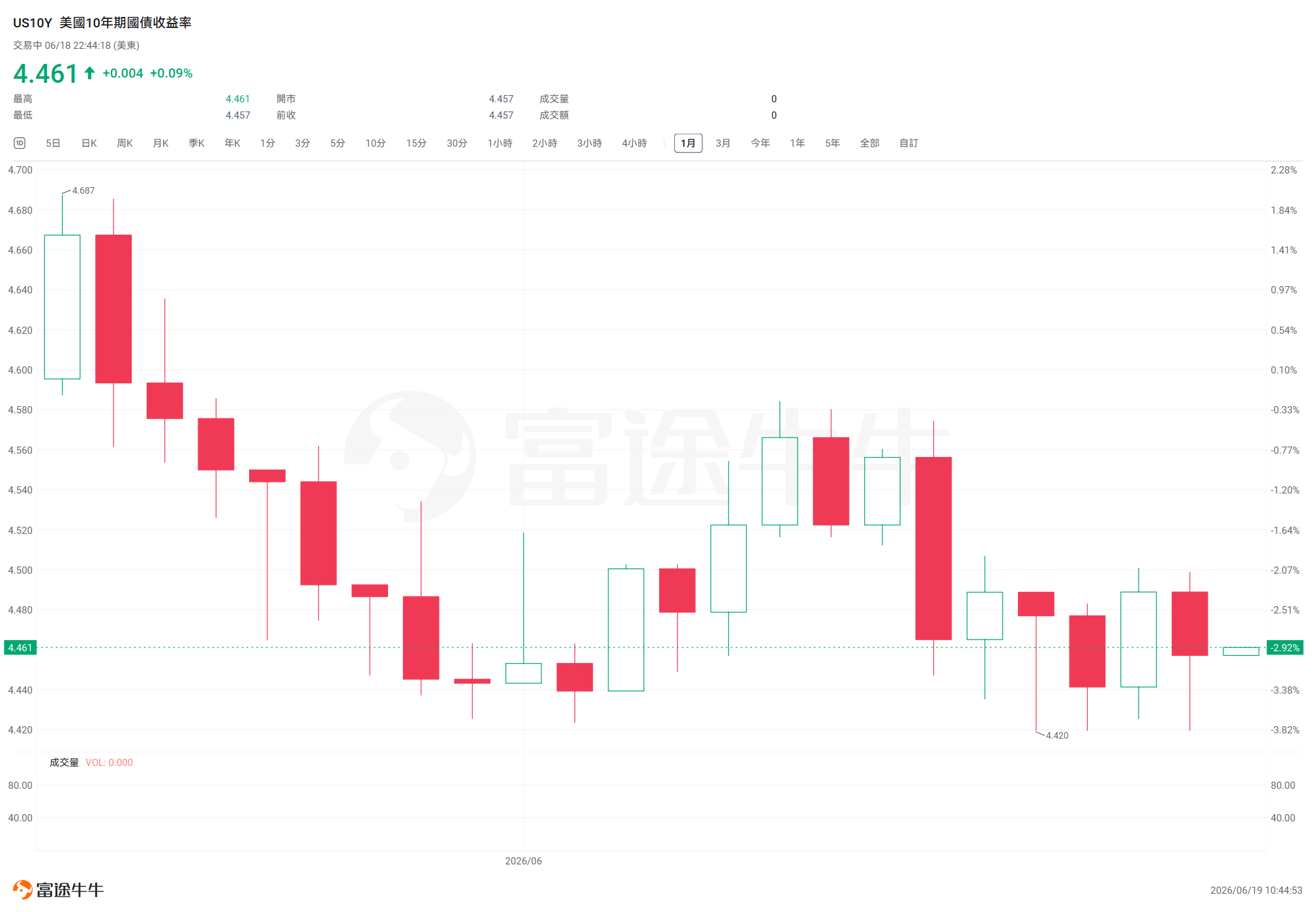
The Treasury market has also absorbed this development—to date,$U.S. 10-Year Treasury Notes Yield (US10Y.BD)$up 0.09% to 4.45%, partially recovering from the decline following the Fed’s decision on Wednesday.
Waller’s Debut Sends Hawkish Signal, Sharply Elevating Rate Hike Expectations
Waller made his official debut as Federal Reserve Chair on Wednesday, delivering a notably hawkish speech in which he emphasized prioritizing the price stability mandate and reaffirmed his commitment to bringing inflation back to the 2% target. This statement rapidly reshaped market expectations for the future policy path.
Prior to this, swap market pricing indicated a near-zero probability of a July rate hike. Following Waller’s remarks, that probability surged sharply to around 50%—equivalent to a coin toss—shifting market sentiment from nearly ruling out a hike to viewing the outcome of the July 28–29 meeting with high uncertainty.
August Federal Funds Futures Become Focal Point of Market Bets
CME Group data show that since Wednesday, open interest in August federal funds futures has increased by approximately 67,000 contracts, representing about 15% of total open interest for that tenor—a significant single-day rise.
Because August federal funds futures expire before the Fed’s September 16 policy meeting, the heightened activity in this contract directly reflects traders’ bets that the Federal Reserve could raise rates as early as July. Participants include hedge funds and asset management firms, using these instruments both to hedge interest rate risk exposure and to take directional views on policy outcomes. As such trades are typically conducted anonymously, it is difficult for outsiders to track specific institutions or ultimate beneficiaries of these derivatives positions.
Notably, the total open interest in federal funds futures currently stands at approximately 1.8 million contracts, still below the one-year average of 2.2 million contracts, according to data from the U.S. Commodity Futures Trading Commission (CFTC), indicating that overall market positioning has not yet become saturated.
Simultaneously, the Secured Overnight Financing Rate (SOFR) futures market—which is highly sensitive to Federal Reserve policy—has also shown a directional reversal: long positions previously betting on rate cuts are being unwound at an accelerating pace. Data show that open interest in the June 2026 SOFR futures contract declined by roughly 90,000 contracts in a single day, signaling that the previously widespread dovish bets on rate cuts are now being systematically dismantled.
This shift aligns with the accumulation of short positions in August federal funds futures, together painting a clear picture of a broader shift in market sentiment: traders are moving from pricing in rate cuts to pricing in rate hikes.
Institutional Assessment: July Remains Uncertain, with Risks Leaning Toward Earlier Action
Views among major institutions on this hiking cycle are evolving rapidly. BNP Paribas maintains its baseline forecast that the hiking cycle will begin in December but explicitly notes that risks are tilting toward earlier action.
“Policymakers’ stance appears to be shifting quickly, and we emphasize that the risk of earlier action is rising—with every meeting, including July’s, now actionable,” wrote BNP Paribas economists James Egelhof and Guneet Dhingra in their research report.
This wording implies that the market’s previous consensus expectation for rate cuts within the year has effectively unraveled, requiring investors to reassess their risk exposure across the entire yield curve.
Editor/melody