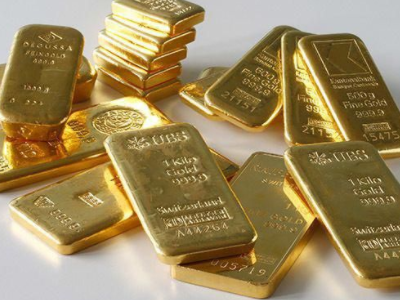
According to Goldman Sachs' estimates, if rate hikes materialize, macro hedging demand for gold will continue to shrink, potentially driving the year-end target price down further to 4,400. Market focus has shifted toward Federal Reserve tightening, with the U.S. Dollar Index surging close to 101 on Friday and international gold prices breaking below 4,150...
On Friday, Goldman Sachs significantly lowered its year-end$USD/XAU (USDXAU.CFD)$price forecast, with the core rationale being that markets no longer expect the Federal Reserve to begin a rate-cutting cycle in 2026.
Analysts Lina Thomas and Daan Struyven stated in their research report that following this revision, the December gold price target is set at $4,900 per ounce, down $500 per ounce from the previous forecast. The firm remains bullish on gold’s overall upward trajectory in the second half of the year, though the upside potential has significantly narrowed compared to earlier expectations.
 The two analysts noted: 'We maintain our bullish outlook on gold prices over the medium to long term, but adopt a more cautious stance in the near term. Gold faces downward pressure in the short run, yet retains room for gains over the medium term.'
Gold has continued weakening in recent months and declined for the third consecutive trading session on Friday, breaking below $4,150 per ounce and falling more than 1% on the day, poised to post its third straight weekly loss. New York futures gold breached the $4,200 per ounce level.$USD (USDindex.FX)$It is approaching the 101 mark, reaching a new high in over a year.
Tim Waterer, Chief Market Analyst at KCM Trade, commented: 'The safe-haven rally in gold triggered by the U.S.-Iran peace deal proved fleeting. Under Warsh, the Fed has adopted a markedly hawkish tone, with a strong dollar now fully dominating market pricing. The new chair’s resolute stance on curbing inflation has directly offset the geopolitical risk premium, reaffirming monetary policy as the key driver of gold prices.'
The Federal Reserve held rates steady at this week’s policy meeting, but nine out of 19 policymakers now support a rate hike before year-end. Kevin Warsh, the newly appointed Fed Chair, publicly stated his commitment to restoring price stability.
Goldman Sachs analysts said the downgrade in the gold price target stems primarily from the firm’s economists pushing back the expected timing of Fed rate cuts to June and December 2027, leading to a sharp downward revision in anticipated inflows into gold ETFs. Goldman Sachs had previously expected rate cuts in December 2026 and March 2027.
CME Group's FedWatch Tool indicates that market pricing implies an 87% probability of a Federal Reserve rate hike in December, up from 61% prior to the FOMC meeting. Gold, as a non-yielding asset, becomes less attractive during periods of rising interest rates.opportunity costThis has led to a general weakening in investors' willingness to allocate capital.
Moreover, analysts noted that the unexpectedly hawkish signal from the Fed’s first policy meeting under Warsh has somewhat alleviated market concerns about the central bank’s policy independence. Warsh was nominated by President Trump, who had previously criticized his predecessor for insufficient rate cuts.
According to Goldman Sachs’ estimates, if the Fed proceeds with a rate hike, demand for gold as a macro hedge could continue to erode, with the year-end target price potentially falling to $4,400 per ounce in an extreme scenario.
Rob Kaplan, Vice Chairman of Goldman Sachs and former President of the Federal Reserve Bank of Dallas, warned in an interview with Bloomberg Television this week that if inflation remains persistently high, the Federal Reserve could raise interest rates as early as September.
However, Goldman Sachs analysts added that gold still benefits from structural tailwinds, primarily supported by central bank demand: institutions forecast global central banks will purchase an average of 50 tons of gold per month this year, declining to 40 tons per month by 2027.
Editor/melody