
Spot gold prices fell more than 2% during the day, while spot silver declined by 3.4%. The MSCI All Country World Index dropped 0.2%, narrowing its weekly gains; the MSCI Asia Pacific Index retreated 0.9% after hitting record highs for five consecutive days; and S&P 500 futures slid 0.5%. The U.S. Dollar Index rose above the 101.00 mark, reaching its highest level since May 2025.
Sudden complications in U.S.-Iran negotiations triggered risk-off sentiment in markets, with precious metals leading the decline and global equities under pressure.
According to a Thursday report from media outlets cited by CCTV News, further talks among Iran, the United States, and European nations—originally scheduled to take place in Switzerland—were postponed due to Israel's continued airstrikes on targets within Lebanon. On the same day, the Trump administration publicly urged Israel to cease fire. The Swiss Federal Department of Foreign Affairs promptly confirmed that the U.S.-Iran talks scheduled for that day had been officially canceled. This development has raised investor concerns over whether the two countries can finalize the details of a nuclear deal within 60 days.
 Amid the news-driven volatility, spot gold prices fell more than 2% during the day, while spot silver declined by 3.4%. The MSCI All Country World Index dropped 0.2%, narrowing its weekly gains; the MSCI Asia Pacific Index retreated 0.9% after hitting record highs for five consecutive days; and S&P 500 futures slid 0.5%. The U.S. Dollar Index rose above the 101.00 mark, reaching its highest level since May 2025. Holidays in the United States, China, and Hong Kong further reduced market liquidity, intensifying risk-off sentiment ahead of the weekend.
This has been a pivotal week for global markets—marked by the signing of a temporary peace agreement between the U.S. and Iran, Federal Reserve Chair Waller’s first policy meeting, during which he maintained a hawkish stance, and the Bank of Japan raising interest rates to their highest level since 1995. Despite multiple shocks, global equity indices still posted a cumulative gain of over 1% for the week, partly supported by sustained enthusiasm around artificial intelligence-related trading.
The MSCI Asia Pacific Index retreated 0.9% after hitting record highs for five consecutive days.
S&P 500 futures declined 0.5%, while Nasdaq 100 futures fell 1%.
The U.S. Dollar Index rose above the 101.00 mark, reaching its highest level since May 2025.
The yield on the 30-year U.S. Treasury note declined by 3 basis points to 4.9%, while 10-year government bond yields in both Japan and Australia rose on the 19th.
Brent crude oil prices fell below $80 per barrel, recording a weekly decline of approximately 9%.
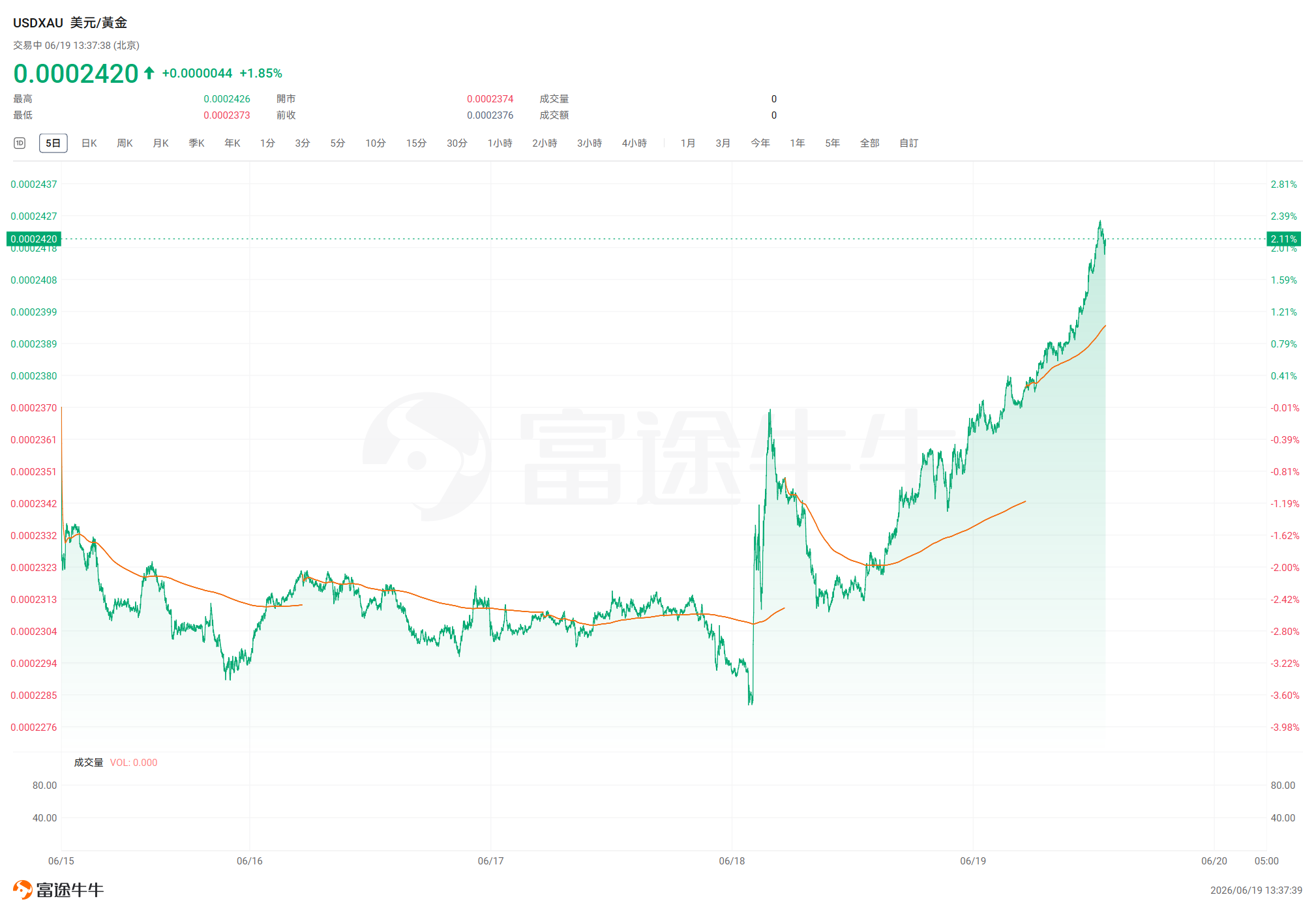
Spot gold prices fell more than 2% during the day, while spot silver declined by 3.4%.
U.S.-Iran Talks Stalled, Casting Doubt on Agreement Implementation
On Thursday, Vance had stated that the 60-day countdown for negotiations on sensitive details outlined in the so-called 'memorandum of understanding' signed by both sides had officially begun, describing the agreement as a 'win-win' for the United States. However, the subsequent talks scheduled for the 19th in Switzerland were canceled, leaving markets doubtful about whether the agreement can proceed as planned.
Josh Gilbert, Chief Analyst for Asia-Pacific and the Middle East at eToro, stated: "Geopolitical clouds are lifting following the agreement's signing, but markets have witnessed reversals more than once. The real hard work has only just begun, and investors are likely to remain cautious until the deal becomes truly ironclad and full navigation through the Strait of Hormuz resumes."
Takenori Igarashi, President of Kawasaki Kisen Kaisha, Ltd., said at the company’s annual shareholders’ meeting in Tokyo that it will take time before full passage through the Strait of Hormuz is restored, as various security measures are still being implemented.
Gold Prices Fall for Third Consecutive Week; Goldman Sachs Sharply Cuts Forecast
Gold prices extended their decline this week, poised to record a third consecutive weekly drop. Multiple factors are weighing on gold: the Federal Reserve’s hawkish stance has reinforced expectations of further rate hikes, while optimism surrounding the U.S.-Iran deal has gradually faded, further eroding gold’s safe-haven appeal.
Goldman Sachs has lowered its year-end$USD/XAU (USDXAU.CFD)$price forecast by USD 500 per ounce. As the Federal Reserve’s hawkish stance becomes clearer, the yield on two-year U.S. Treasuries, which surged 13 basis points to a more-than-one-year high in the previous session, stabilized around 4.18% on the 19th.
Crude Oil Plunges 9% This Week; Full Resumption of Hormuz Transit Still Some Time Away
$Brent Last Day Financial Futures (AUG6) (BZmain.US)$Prices fell below USD 80 per barrel, marking a weekly decline of approximately 9%. Following the signing of a temporary peace agreement between the U.S. and Iran, shipping through the Strait of Hormuz gradually returned to normal, alleviating what had been the largest supply shock in the history of global crude oil markets and triggering a sharp drop in oil prices.
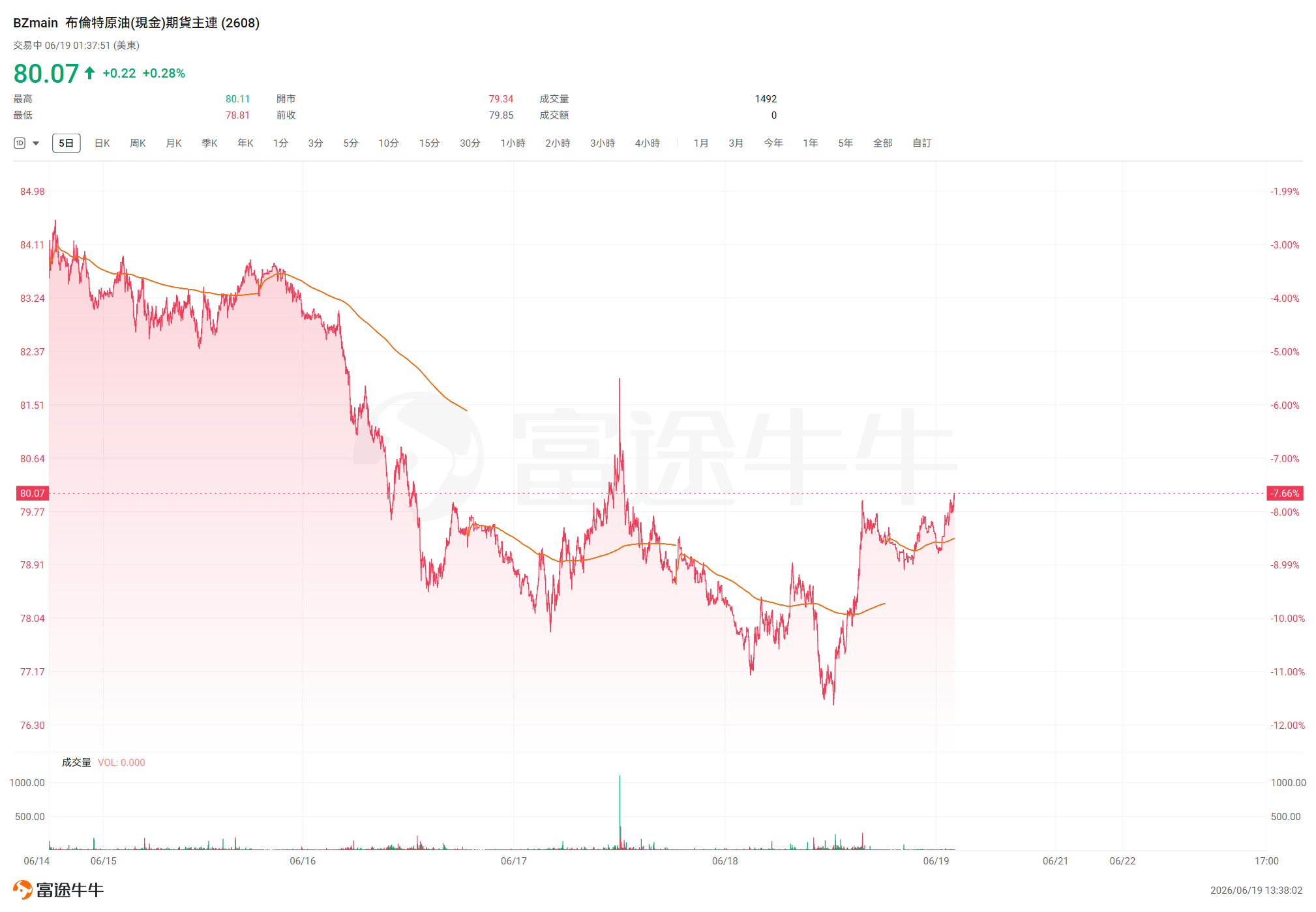
This sharp correction means crude futures have nearly erased all gains accumulated since the outbreak of hostilities—triggered in February this year when the United States and Israel launched attacks on Iran over its nuclear program.
Tony Sycamore, market analyst at IG Australia, said on Bloomberg Television: "This week’s repricing has been extremely severe, partly because Iranian oil supply effectively restarted almost overnight. What lies ahead is execution risk—many details still need to be finalized."
Dollar Strengthens, Bond Markets Diverge, Yen Under Pressure
The broad U.S. dollar index rose 0.1%, bringing its cumulative gain for the week close to 1%. The Japanese yen became the focal point in foreign exchange markets, with its exchange rate hovering near a four-decade low. Japanese Finance Minister Satsuki Katayama stated that the government could take decisive action against speculative currency fluctuations.
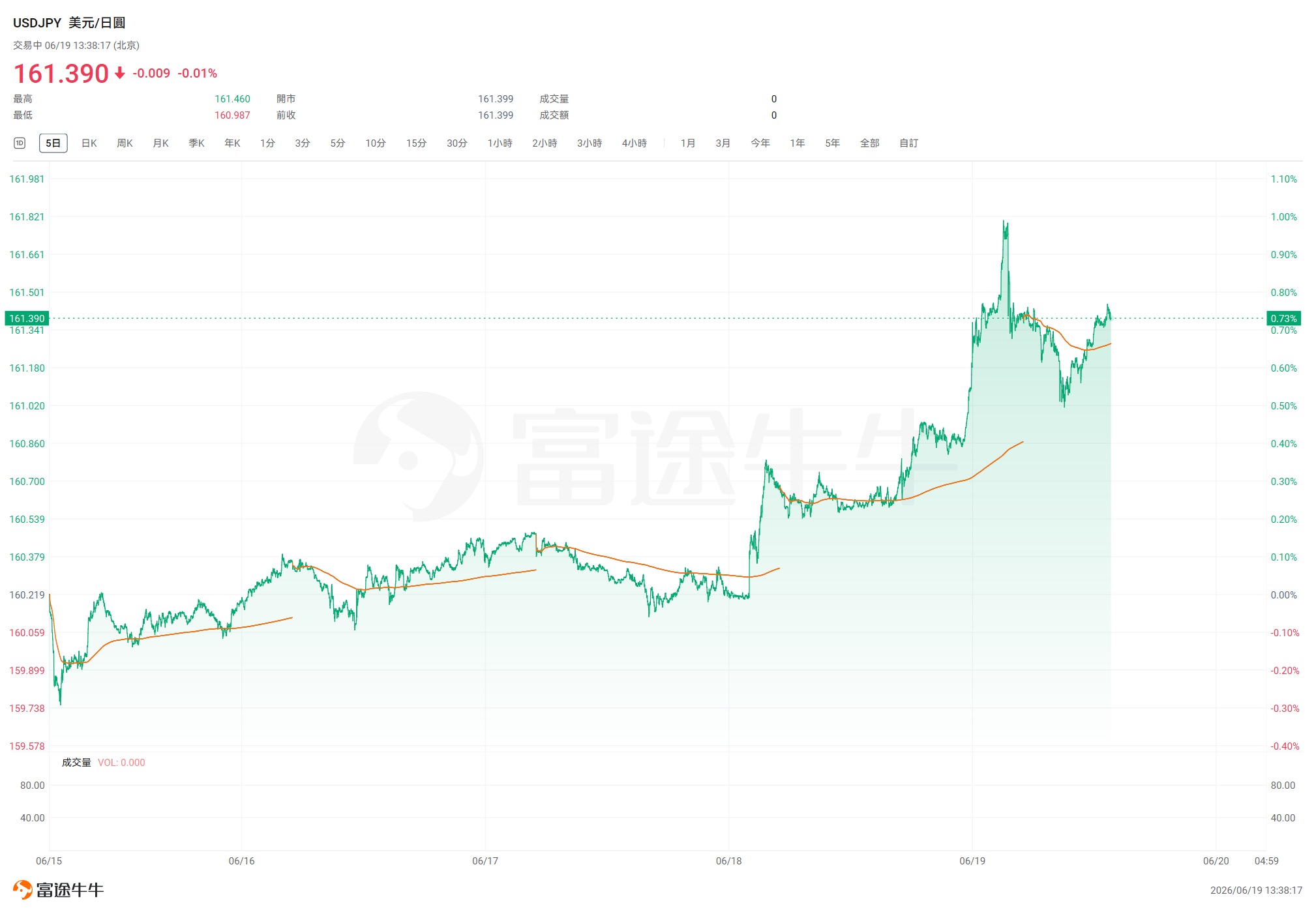
Bond markets showed a divergent pattern. The yield on the 30-year U.S. Treasury note declined by 3 basis points to 4.9%, reflecting market expectations that long-term inflation will remain under control; meanwhile, the 2-year yield remained relatively stable, indicating persistent expectations of near-term rate hikes. Due to a U.S. public holiday, spot trading in U.S. Treasuries was suspended during Asian hours. Yields on 10-year government bonds in both Japan and Australia rose on the 19th.
Sterling edged lower against the U.S. dollar. Andy Burnham won a parliamentary by-election, positioning himself as a strong contender for Mayor of Greater Manchester and a potential challenger to Prime Minister Keir Starmer, thereby increasing political uncertainty in the UK. On the 18th, the Bank of England held its benchmark interest rate steady at 3.75%, describing the recent decline in oil prices as "encouraging." However, two of the nine Monetary Policy Committee members voted in favor of an immediate 25-basis-point rate hike, citing persistent inflationary pressures. According to Bloomberg, analysts have warned that rising political and fiscal risks in the UK could further weigh on the pound.
Want to select stocks or get a stock diagnosis? Curious about the opportunities and risks in your portfolio? For all your investment questions,Just ask Futubull AI!

Editor/melody